



The Telethon Kids Institute has created the Play Active Program which contains a physical activity policy to assist services in putting their policy into practice.

National Quality Framework (NQF) presented the Annual Performance Report, 2021 on behalf of the Australian Children’s Education and Care Quality Authority (ACECQA). This report shows the impact of covid-19, on children’s health and safety, educational programs and practice, the effect on children from disadvantageous and vulnerable backgrounds, and how the workforce is working with intention of the well-being of children and with the public awareness of service quality.

According to the Educators’ Guide to the Early Years Learning Framework, documentation is the practice of recording and creating evidence of learning and the learning progress, helping make it visible. Though documentation is mandated to meet regulatory and pedagogical purposes, there are no prescriptive rules about how it may be done. The following article provides strategies for documenting in an early childhood setting.

Celebrations are among the most important binding factors in any community or society. In childhood services too, celebrations can be a great way to nurture a sense of being and belonging in children, when planned and implemented with sensitivity and reflection. Here are a few things to keep in mind when incorporating celebrations in early childhood services.

A key objective of the National Quality Framework is to promote continuous improvement in the provision of quality education and care services. Every service is required to be assessed and rated for quality by regulatory bodies and self-assessment is one of the most important steps in this entire process. Here is a bit more about the importance of self-assessment in the early care and education context.

A service assessment and rating visit is an opportunity to demonstrate the strengths of your service and seek user feedback. It is important to be able to articulate your achievements and practices effectively. The following article provides information on Supporting Educators During The Assessment and Rating Process, Providing Opportunites For Articulation, Using The Right Langauge, Reflecting On Practice and more.

When writing Summative Assessments it provides you an opportunity to summarise all the documentation you have collected on each child's learning and development and "sum" up to emphasize children's strengths and make learning visible.
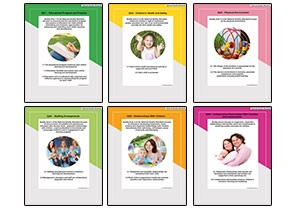
The following National Quality Areas Posters include a definition of the Quality Area and the standards for each. These standards are high-level outcome statements. These can be displayed within the service and for Educators to use as a quick reference guide.
 The Children’s Services Award introduces a streamlined classification system and updated pay rates designed to better recognise the skills, qualifications, and responsibilities of early childhood… Read More
 The Children’s Services Award has 8 clear levels. These levels make it easier to understand where you fit, based on your experience, qualifications, and responsibilities.… Read More
 When working as a qualified early childhood teacher (with a university degree) within a service, your rate of pay will come from the Educational Services… Read More
 Diploma-qualified educators play a vital role in early childhood services, taking on responsibilities that range from supporting children’s learning and development to leading rooms and… Read More
 Certificate III qualified educators form the backbone of early childhood services, providing essential care and learning support for children across all settings. Their wages under… Read More
 Early Childhood Teachers (ECTs) play a vital role in leading curriculum and pedagogy in early learning settings. Regulation 272 of the Education and Care Services… Read More
 Discover how school readiness programs support children’s independence, confidence, and skills for a successful transition into primary school.
Read More
Discover how school readiness programs support children’s independence, confidence, and skills for a successful transition into primary school.
Read More
 When an Educator is not performing their tasks or responsibilities at best practice, these issues need to be addressed for the Educator to understand where… Read More
 Educators can maximise tax deductions by claiming classroom supplies, training, union fees, and home office costs this financial year.
Read More
Educators can maximise tax deductions by claiming classroom supplies, training, union fees, and home office costs this financial year.
Read More
 A staff appraisal is a formal, systematic process of determining and reviewing the performance of early childhood educators over a period of time, usually a… Read More

A recent report shared by 7NEWS Australia warns of a troubling trend: fewer Australian parents...
See more...
In light of the recent events, it's important for services to reassure families that this...
See more...
Quality Area 6 of the National Quality Standard (NQS) focuses on Collaborative Partnerships with Families...
See more...