


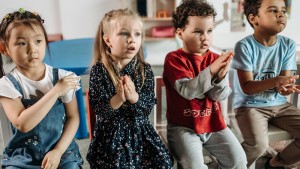
Body percussion is the art of making rhythmic sounds using the body clapping, stomping, patting thighs, snapping fingers, or chest taps. It’s accessible, requires no instruments, and builds musicality, coordination, and group awareness.

Music has always been a powerful tool in OSHC programs—whether it’s setting the tone for a calm morning or energising children after school. Many educators are exploring how to use music not just as background noise, but as a way to support regulation, inclusion, and child agency.
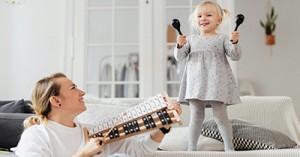
Celebrate International Music Day in early childhood with rhythm, culture, and joyful learning.
World Music Day is celebrated on June 21st. Music is a powerful tool for fostering inclusivity and cultural appreciation in early childhood education. It introduces children to diverse sounds, rhythms, and traditions from around the world, helping them develop empathy and a broader understanding of different cultures.
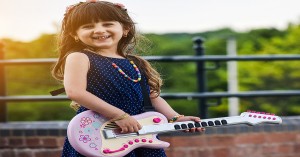
Children begin to learn that music and movement communicate messages and represents actions. Music naturally delights and moves most children. Throughout the early childhood years, children are learning to do new things with their body and music and movement encourages children to explore what they are able to do.
 The Children’s Services Award introduces a streamlined classification system and updated pay rates designed to better recognise the skills, qualifications, and responsibilities of early childhood… Read More
 The Children’s Services Award has 8 clear levels. These levels make it easier to understand where you fit, based on your experience, qualifications, and responsibilities.… Read More
 When working as a qualified early childhood teacher (with a university degree) within a service, your rate of pay will come from the Educational Services… Read More
 Diploma-qualified educators play a vital role in early childhood services, taking on responsibilities that range from supporting children’s learning and development to leading rooms and… Read More
 Certificate III qualified educators form the backbone of early childhood services, providing essential care and learning support for children across all settings. Their wages under… Read More
 Early Childhood Teachers (ECTs) play a vital role in leading curriculum and pedagogy in early learning settings. Regulation 272 of the Education and Care Services… Read More
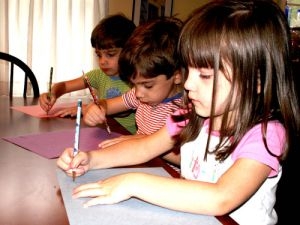 Discover how school readiness programs support children’s independence, confidence, and skills for a successful transition into primary school.
Read More
Discover how school readiness programs support children’s independence, confidence, and skills for a successful transition into primary school.
Read More
 When an Educator is not performing their tasks or responsibilities at best practice, these issues need to be addressed for the Educator to understand where… Read More
 Educators can maximise tax deductions by claiming classroom supplies, training, union fees, and home office costs this financial year.
Read More
Educators can maximise tax deductions by claiming classroom supplies, training, union fees, and home office costs this financial year.
Read More
 A staff appraisal is a formal, systematic process of determining and reviewing the performance of early childhood educators over a period of time, usually a… Read More
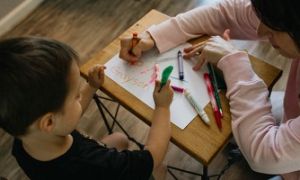
The Early Years Learning Framework outlines Intentional Teaching as one of the major practice guidelines...
See more...
The Children’s Services Award has 8 clear levels. These levels make it easier to understand...
See more...
Sensory bottles are simple yet powerful tools for children’s play, regulation, and learning. They are...
See more...