



Educators often wonder: Do we need to display something from every culture every day to be inclusive? The answer is no. The EYLF not require a daily checklist of cultural artifacts. Instead, it emphasises creating environments that are inclusive, meaningful, and responsive to the children, families, and communities you serve.
Authentic representation is about embedding diversity across the year and ensuring children see their identities reflected in ways that feel genuine, not tokenistic. This article provides a practical framework for balancing broad diversity with specific cultural representation.

Lunar New Year (17th February 2026) is a vibrant celebration observed across many Asian cultures, symbolizing renewal, family, and hope for the year ahead. In early childhood settings, it offers a rich opportunity to honor cultural diversity, foster inclusion, and spark joy through sensory experiences, storytelling, and creative play. By tailoring activities to babies, toddlers, and preschoolers, educators can create meaningful, age-appropriate engagements that respect traditions while nurturing curiosity and belonging.

Calendars are not just tools for marking days—they are cultural narratives that shape identity, belonging, and worldview. In early childhood education, respecting diverse calendars means recognizing that families may follow the Gregorian calendar but also lunar cycles, seasonal markers, or religious observances. For children, seeing their traditions acknowledged validates their identity and builds emotional safety. For educators, embedding diverse calendars into practice enriches curriculum, strengthens family partnerships, and aligns with the NQS focus on cultural competence and inclusion.

Here’s a thoughtful set of critical reflection questions you can use to evaluate and enrich cultural displays in your service.
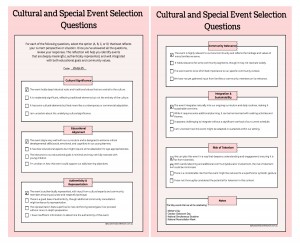
This template offers a list of questions to select the cultural and special events to celebrate at your service.

When celebrations are well thought out—integrating community input, respecting complexity, and linking meaningfully with the curriculum—they transform into powerful learning experiences. But when they become obligatory, surface-level gestures, they risk doing more harm than good by trivializing cultural significance. Here are some reflective questions you can ask to guide your decision on which significant cultural event to celebrate in an early childhood setting.

The following article lists 20 Cultural Games, Instructions For Each Game, Benefits Of Teaching Children These Games, Linking To The EYLF and more.

Incorporating cultural texts into nursery rhymes is a fantastic way to celebrate diversity and introduce children to different cultures. The following article provides information on The Importance To Incorporate Cultural Text Into Nursery Rhymes, Steps To Incorporate Cultural Texts, Example Adaptions, and more.
There is enough evidence in the history of the world to show the steep cost that societies pay when racism in its processes and institutions is not addressed and combated. In Australia, all early childhood learning frameworks mandate that all children should feel safe, secure and supported in their learning environment. Additionally, learning frameworks are underlined by the principle of respect for diversity in all forms. The following article provides strategies to ensure zero tolerance for racism in early childhood settings.

Anti-bias experiences are about guiding children to be able to think about and have words for how people are the same and how they are different. It includes helping children feel and behave respectfully, warmly, and confidently with people who are different from themselves. It includes encouraging children to learn both about how they are different from other children and about how they are similar.
 The Children’s Services Award introduces a streamlined classification system and updated pay rates designed to better recognise the skills, qualifications, and responsibilities of early childhood… Read More
 The Children’s Services Award has 8 clear levels. These levels make it easier to understand where you fit, based on your experience, qualifications, and responsibilities.… Read More
 When working as a qualified early childhood teacher (with a university degree) within a service, your rate of pay will come from the Educational Services… Read More
 Diploma-qualified educators play a vital role in early childhood services, taking on responsibilities that range from supporting children’s learning and development to leading rooms and… Read More
 Certificate III qualified educators form the backbone of early childhood services, providing essential care and learning support for children across all settings. Their wages under… Read More
 Early Childhood Teachers (ECTs) play a vital role in leading curriculum and pedagogy in early learning settings. Regulation 272 of the Education and Care Services… Read More
 Discover how school readiness programs support children’s independence, confidence, and skills for a successful transition into primary school.
Read More
Discover how school readiness programs support children’s independence, confidence, and skills for a successful transition into primary school.
Read More
 When an Educator is not performing their tasks or responsibilities at best practice, these issues need to be addressed for the Educator to understand where… Read More
 Educators can maximise tax deductions by claiming classroom supplies, training, union fees, and home office costs this financial year.
Read More
Educators can maximise tax deductions by claiming classroom supplies, training, union fees, and home office costs this financial year.
Read More
 A staff appraisal is a formal, systematic process of determining and reviewing the performance of early childhood educators over a period of time, usually a… Read More

Critical reflection is more than just “thinking back” on what happened in your classroom. It’s...
See more...
Program boards are more than just wall displays—they’re a window into the learning journey of...
See more...
This reflection guide is designed to support educators in rethinking school readiness through a holistic...
See more...