


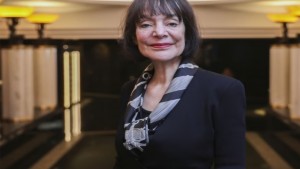
Carol Dweck (born October 17, 1946) is an American psychologist and professor at Stanford University, best known for her pioneering research on mindsets in learning and achievement. Her work on the growth mindset has transformed education worldwide, showing that children’s beliefs about intelligence and ability profoundly shape their motivation, resilience, and success.
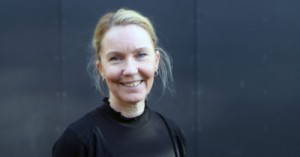
Ellen Beate Hansen Sandseter is a Norwegian researcher and professor at Queen Maud University College of Early Childhood Education. She is internationally recognized for her work on risky play in early childhood, highlighting how safe risk-taking supports children’s confidence, resilience, and wellbeing. Sandseter challenges overprotective practices in schools and families, arguing that shielding children from risk can hinder their development.

Alison Gopnik (born June 16, 1955) is a leading developmental psychologist and philosopher at the University of California, Berkeley. She is best known for her research on how children learn through exploration, play, and causal reasoning. Gopnik’s work emphasizes that children are active learners who construct and test ideas, much like scientists.

A: No, you don’t have to include theorists in every piece of documentation, but referencing them can deepen your practice, especially when aligned with EYLF V2.0 and the National Quality Standard.

Early childhood education is a dynamic and deeply relational field. Educators are constantly navigating children’s diverse needs, family expectations, and systemic requirements. To sustain quality practice, reflection is essential. Reflection allows educators to pause, analyze experiences, and adapt their approaches to better support children’s learning and well-being.
One powerful framework for reflection is Gibbs Reflective Cycle (1988). Widely used in education, healthcare, and professional development, it provides a structured way to think critically about experiences and plan for improvement. In early childhood, Gibbs Cycle helps educators move beyond surface-level observations to deeper insights about pedagogy, relationships, and environments.

Early childhood education thrives on curiosity, exploration, and authentic engagement. David A. Kolb’s Experiential Learning Theory offers a powerful framework for understanding how young children learn through doing, reflecting, thinking, and trying again. Rather than viewing learning as a linear process, Kolb positions it as a continuous cycle—one that mirrors the natural way children interact with the world.

This cheat sheet offers quick, accessible reference to major theorists and concepts that shape early education practice. It includes Theories, Concepts, and Documentation Prompts, Quick Tips for Embedding Theory in Documentation, Prompts for Reflective Language, List Of Theorist Language and more.

Applying theorists in observations involves connecting your observations of children’s behaviors, interactions, and development to established theories of learning and development. This approach not only deepens your understanding of children’s needs but also aligns with the EYLF and the NQS. The following article provides information on Understanding Key Theorists and Their Concepts, Linking Observations to Theories, Incorporating Theories into Planning, Practical Examples and more.
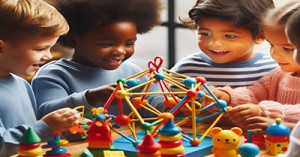
Social Constructivist Theory in Early Childhood Education is a learning approach grounded in the idea that children actively construct knowledge through their social interactions and cultural experiences. Rather than viewing learning as an individual process of acquiring information, social constructivism emphasizes that children build understanding through communication, collaboration, and shared experiences. The following article provides information on Key Concepts, Applications In Early Childhood, Modern Relevance In Childcare and more.
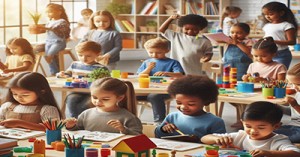
This article explores key learning theories, their practical applications, and how they align with the EYLF and NQS. Educators can use these insights to enhance teaching strategies, scaffold children's learning, and create inclusive learning experiences that cater to diverse developmental needs.
 Working as a childcare professional can be a challenge especially when dealing with behavioural problems which may arise. The techniques we use when dealing with… Read More
 There are different types of behaviour that children can display and sometimes it can be hard to manage, especially if a child is having behavioural… Read More
 As Educators, there will be many instances where you will need to write about a child's behaviour. For a behaviour management plan, assessments, half-yearly or… Read More
 As a parent, your behavioural expectations of your child can be higher than what is actually developmentally appropriate for your child's age.
Read More
As a parent, your behavioural expectations of your child can be higher than what is actually developmentally appropriate for your child's age.
Read More
 As Educators when communicating with Parents (through verbal or non-verbal communication), there will be times where we need to discuss issues or concerns that may… Read More
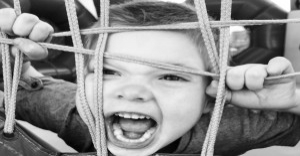 Challenging Behaviour is when a child does something that hurts themselves and/or other people.
Read More
Challenging Behaviour is when a child does something that hurts themselves and/or other people.
Read More
 It's always difficult to bring up behavioural issues with parents, it can be nerve wrecking to tell a parent that their child misbehaves but that… Read More
 As part of your child's development it is normal for your child to have anxiety and fears. A baby commonly shows a fearful sign to… Read More
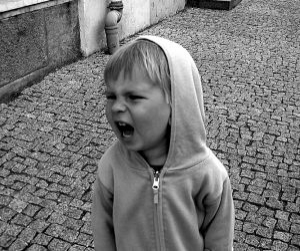 All children deal with anger on a daily basis. Thinking about it as a child, there is a lot to be angry about. Elder people… Read More
 It is important to understand that your child behaviour problems could not just be from attention seeking. There are many factors to take into consideration… Read More
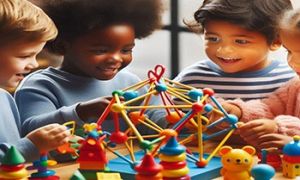
Social Constructivist Theory in Early Childhood Education is a learning approach grounded in the idea...
See more...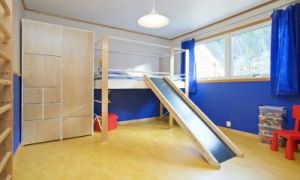
Is your toddler too big for their crib? Are they constantly trying to climb in...
See more...
Critical reflection is a powerful tool for understanding and addressing challenging behaviours in young children...
See more...