



Applying theorists in observations involves connecting your observations of children’s behaviors, interactions, and development to established theories of learning and development. This approach not only deepens your understanding of children’s needs but also aligns with the EYLF and the NQS. The following article provides information on Understanding Key Theorists and Their Concepts, Linking Observations to Theories, Incorporating Theories into Planning, Practical Examples and more.
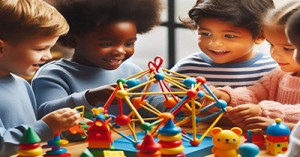
Social Constructivist Theory in Early Childhood Education is a learning approach grounded in the idea that children actively construct knowledge through their social interactions and cultural experiences. Rather than viewing learning as an individual process of acquiring information, social constructivism emphasizes that children build understanding through communication, collaboration, and shared experiences. The following article provides information on Key Concepts, Applications In Early Childhood, Modern Relevance In Childcare and more.

This article explores key learning theories, their practical applications, and how they align with the EYLF and NQS. Educators can use these insights to enhance teaching strategies, scaffold children's learning, and create inclusive learning experiences that cater to diverse developmental needs.



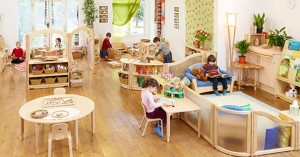
Developed in northern Italy after the Second World War, the Reggio Emilia is a child-centred approach to early childhood education. It puts a child’s sense of self-worth and agency at the heart of its pedagogical ideas and its practices are aimed at nurturing children’s multiple capabilities. The following article provides information About Reggio Emilia, The Reggio Emilia Environment, The Reggio Curriculum, Role Of The Educator, Principles and Practices and more.

Learning styles, according to Howard Gardner, are the ways in which an individual approaches a range of tasks. The following provides information on Gardner's learning styles.

Swiss psychologist Jean Piaget theorized in the pre-operational stage between two and seven years, children start using objects or actions to give meanings other than literal ones like using a pasta strainer as a hat. This is symbolic play and marks the beginning of creativity and conceptual learning. The following article provides the three main phases of symbolic play in the preoperational stage from 18 months to 5 years old and how educators can support their learners in each phase.
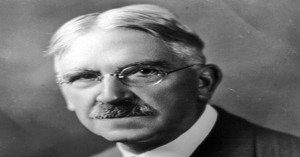
John Dewey is often seen as the proponent of learning by doing – rather than learning by passively receiving. He believed that each child was active, inquisitive and wanted to explore. He believed that children need to interact with other people, and work both alone and cooperatively with their peers and adults. The following provides information about John Dewey, Definition Of The Curriculum, Main Features Of Dewy's Theory of Education, Progressive Education and Dewey's Theories In Practice.
 Working as a childcare professional can be a challenge especially when dealing with behavioural problems which may arise. The techniques we use when dealing with… Read More
 There are different types of behaviour that children can display and sometimes it can be hard to manage, especially if a child is having behavioural… Read More
 As Educators, there will be many instances where you will need to write about a child's behaviour. For a behaviour management plan, assessments, half-yearly or… Read More
 As a parent, your behavioural expectations of your child can be higher than what is actually developmentally appropriate for your child's age.
Read More
 As Educators when communicating with Parents (through verbal or non-verbal communication), there will be times where we need to discuss issues or concerns that may… Read More
 Challenging Behaviour is when a child does something that hurts themselves and/or other people.
Read More
 It's always difficult to bring up behavioural issues with parents, it can be nerve wrecking to tell a parent that their child misbehaves but that… Read More
 As part of your child's development it is normal for your child to have anxiety and fears. A baby commonly shows a fearful sign to… Read More
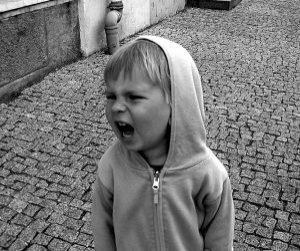 All children deal with anger on a daily basis. Thinking about it as a child, there is a lot to be angry about. Elder people… Read More
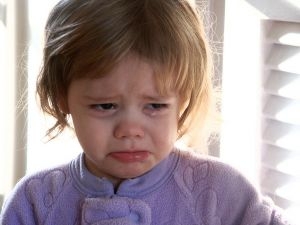 It is important to understand that your child behaviour problems could not just be from attention seeking. There are many factors to take into consideration… Read More

Sometimes you hold your baby in your arms, talking gently, swinging softly side to side...
See more...
Supporting children in OSHC with regulation techniques means creating safe, predictable environments and teaching strategies...
See more...
Social Constructivist Theory in Early Childhood Education is a learning approach grounded in the idea...
See more...