


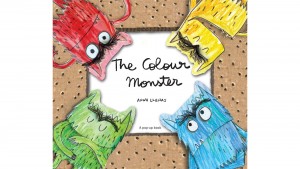
The Colour Monster helps children explore emotions with colours, building empathy and self‑regulation.
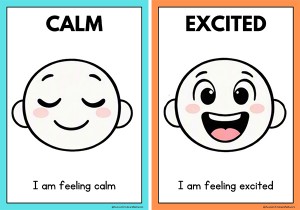
This resource includes eight colourful playdough mats designed to support early emotional literacy through hands‑on play. Each mat features a simple outline face and bold emotion word, inviting children to shape the expression with playdough.

Explore six emotion faces made from grass, leaves, and twigs. A creative nature art set for early childhood emotional learning.

Explore creative photo ideas for teaching emotions in early childhood. Practical strategies, challenges, and wellbeing through play.

Stimming refers to repetitive movements, sounds, or actions that people use to regulate emotions, manage sensory input, or express themselves. While it’s often associated with autism and ADHD, everyone engages in some form of stimming (like tapping a foot or twirling hair). In early childhood settings, educators frequently observe stimming behaviors and wonder how best to respond. The key is to recognize stimming as a natural form of self-regulation and support it in safe, respectful ways.
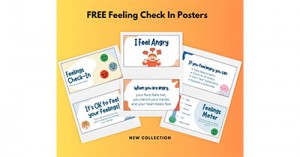
In early childhood settings, emotional literacy is foundational to well-being, learning, and relationships. The free printable Feeling Check-In posters featuring clear visuals, child-friendly language, and actionable strategies offer educators a powerful way to support children in identifying, expressing, and managing their emotions. Whether used during transitions, check-ins, or moments of dysregulation, these posters help embed emotional intelligence into daily practice.

In early childhood education, documentation is often framed as evidence or proof of learning, compliance, or curriculum alignment. But what if we reimagined it as a mirror? A tool that reflects not just cognitive milestones but emotional journeys, identity formation, and the quiet power of self-expression?
Visual documentation drawings, photos, annotated art, and symbolic storytelling can become a language of emotional literacy. It allows children to say what words cannot and invites educators to listen with their eyes, hearts, and intuition.

Helping toddlers and preschoolers build emotional vocabulary is like giving them a toolbox for life—they learn to name what they feel, which helps them express themselves, regulate emotions, and connect with others. Here are some engaging, developmentally appropriate strategies and games to teach emotional vocabulary.

Self-talk is a powerful tool for helping children manage their emotions and behaviors. When used intentionally, it can guide children through tricky moments by giving them the language to pause, reflect, and choose a response. The following article provides information on Why It Works, What Are The Psychological Benefits Of Self-Talk, How to Encourage It, Examples of Self-Talk For Young Children, Activities to Support Self-Talk and more.

Emotional awareness and self-regulation are crucial skills for young children, helping them navigate social interactions, manage their feelings, and develop resilience. The following article provides information on Why Are These Skills Important?, How to Support These Skills in Early Childhood, Using Language To Help With Emotional Awareness and Self-Regulation Skills In Early Childhood, Examples of Self-Talk To Support Self-Regulation, Using Social Scripts, and more.
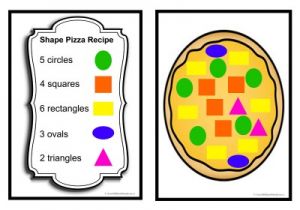
The My Shapes Pizza is a fun activity that enables children to create their own...
View Worksheet...
Car Wheels Colour Match provide children with individual colour cars in primary and secondary colours...
View Worksheet...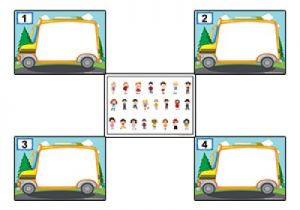
School Bus Counting is a counting activity from 1 to 10 for children to match...
View Worksheet...