



Childcare ratios remain frozen in time. Educators face burnout; children need support — urgent reform is vital for quality care in 2026.

Educators across Australia are raising urgent concerns that they cannot adequately supervise all children in their care due to staffing shortages and lack of extra support. The admission highlights a growing crisis in the early childhood sector, where rising demand collides with limited resources.

The United Workers Union (UWU), through its Big Steps Campaign, is advancing claims in upcoming multi‑employer bargaining to improve educator‑to‑child ratios across Australia.


A childcare centre was fined after a one‑year‑old went missing during a bush excursion, exposing serious supervision failures. The child was found unharmed, but the centre faced regulatory penalties and reputational damage, underscoring that educator‑to‑child ratios remain dangerously inadequate and government inaction continues to put children at risk.

At present, “under the roof” ratios are not yet formally abolished in law, but Education Ministers announced in February 2026 that they intend to remove this practice. ACECQA has flagged that ratios will soon be required per room, with educators counted only when physically present and supervising children.
Until the National Law and Regulations are officially amended and ACECQA issues binding guidance, services using service‑wide calculations are not breaching current regulations, provided they maintain adequate supervision.

On July 15, educators are once again being called to walk off the job, demanding a 15% wage increase. It’s a familiar rallying cry, one we’ve heard in previous years, with little lasting change. Yet while wages matter, the government has already acted through the gender pay equity evaluation, with increases scheduled over the next five years. The real crisis isn’t pay. It’s ratios.
Every abuse case, every supervision failure, every moment when educators are stretched too thin points to one undeniable truth: without safe ratios, children are at risk and educators are set up to fail. Walking off for wages already promised risks missing the bigger fight. If we want to transform early childhood education, protect children, and restore trust, our collective energy must shift toward demanding ratio reform.

Every time a shocking case of child abuse surfaces, the sector braces for another wave of reactionary policies. Device bans, endless training modules, and compliance paperwork pile up on educators who already uphold professional standards. Yet none of these measures address the core issue: ratios.

Education Minister Jess Walsh has announced today that the government is banning the unsafe business practice of misuse of “under-the-roofline” ratios. For many educators, this statement feels like a long-awaited victory. Yet the choice of wording — misuse — leaves room for interpretation, and that ambiguity deserves closer scrutiny.

At the end of 2026, the early childhood sector is still waiting for ratio reform. Despite years of advocacy, despite mounting evidence, and despite repeated calls from educators, families, and sector leaders, ratios remain unchanged. Everything else seems to be happening—new frameworks, reporting requirements, compliance checks—but the most fundamental safeguard, the number of adults available to protect and nurture children, is still overlooked.

Teach shape recognition with oval colouring worksheets. These printables build fine motor skills while helping...
View Worksheet...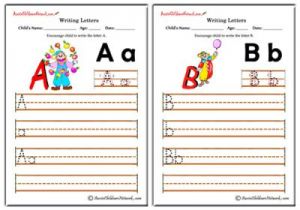
Make writing fun with clown‑themed alphabet worksheets. These colourful printables build phonics awareness and handwriting...
View Worksheet...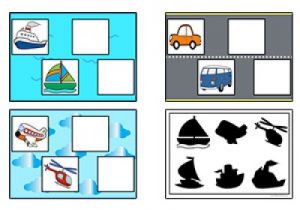
Transportation Shadows Cut and Paste is a great activity for children to identify the right...
View Worksheet...