



This cheat sheet condenses the principles, practices, and learning outcomes into a quick reference, with real OOSH examples to show how theory translates into everyday practice.

In OSHC, “child agency” means recognising children as capable decision‑makers who actively shape their experiences, rather than simply following adult‑led routines. It’s about giving them voice, choice, and ownership in the program and showing this through practical, everyday practices.

The My Time, Our Place (MTOP) Framework is designed for school-age care, with five outcomes that guide planning and reflection. Embedding it means linking everyday activities to these outcomes in ways that are intentional, inclusive, and meaningful. Here’s a clear breakdown with activity examples mapped to each outcome.

The MTOP Outcomes Meanings and Examples Posters provide detailed meanings for each of the 5 learning outcomes as well as examples of how each learning outcome can be implemented into practice. This is great to support educators to understand the meaning of each of the individual learning outcomes and also assist educators in knowing how to demonstrate the learning outcomes in the environment.

The following provides a list of activity ideas for each sub-outcome of MTOP Outcome 1: Children Have a Strong Sense of Identity.

MTOP (My Time, Our Place) Outcome 1 focuses on children having a strong sense of identity. This means that in school-age care settings, children develop a sense of belonging when they feel accepted and can build relationships with peers and educators. Their confidence, motivation, and self-identity are shaped by their interactions with others.

From today, 01 February 2024, both EYLF 2.0 and MTOP 2.0 will now come into effect and services will have to implement the new updated frameworks.
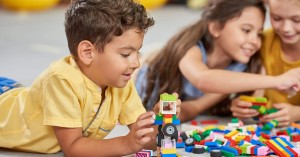
To support children achieve learning outcomes from the MTOP Framework Version 2.0, the following list gives educators examples of how to promote children's learning in each individual learning outcome. These can be used when assessing children's learning, critically reflecting on the experiences planned, strategies to implement for each learning outcome and more. It also encourages and promotes each individual outcome throughout the early childhood setting.

This is a guide for educators on what to observe under each sub-learning outcome from the MTOP Framework when a child is engaged in play and learning. Educators can plan experiences for the curriculum and gain an understanding of how children can achieve each individual outcome.
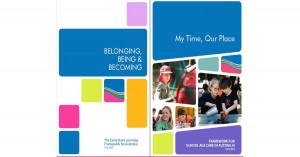
ACECQA has released new resources explaining the updates to the nationally approved learning frameworks EYLF, and MTOP and clarification and expanded explanation across parts of the original learning frameworks. The following provides the EYLF and MTOP Version 2 Booklets as well as other information resources.
 Open ended questions cannot be responded to with one word answers such as yes or no. These types of questions enables a child to provide… Read More
 During your child’s preschool years, an important milestone begins to emerge. This is the development of pre-writing skills. Pre-writing skills are used to encourage, develop… Read More
 An Acknowledgment of the Country is a way of showing respect for the Traditional Owners and can be given by both non-Indigenous people and Aboriginal… Read More
 Open ended materials enables children to play freely. They are objects that have no rules to follow, use or function. Raw materials that can be… Read More
 Language plays an important role in a child’s development. It enables a child to communicate effectively with their family, learn at school, socialize with friends,… Read More
 Like adults, children have to deal with their own stress in life. Moving house, starting a new school, preparing for a new sibling - these are… Read More
 Playdough is such a versatile material. It provides numerous benefits to children as they manipulate it, it is safe and soothing and provides children with… Read More
 Teaching children about sustainability enables them to appreciate and respect the natural environment. Early childhood services can provide meaningful hand on learning experiences in order… Read More
 Recycling is an important concept that teaches children to care for the environment. It encourages children to be responsible and show a growing appreciating for… Read More
 Incursions provide children with the opportunity to explore meaningful learning experiences in the comfort of their early childhood service. The following provides a directory of… Read More

Higher duties in the Children's Services Award refer to situations where an educator temporarily performs tasks...
See more...
One of the greatest French artists of the 20th century, Henri Matisse is known for...
See more...
Quality Area 5: Relationships with Children is fundamental in early childhood education as it lays...
See more...