



Descriptive praise and appreciative praise are powerful tools for encouraging positive behavior and fostering intrinsic motivation in children. The following article provides information on Descriptive Praise, Appreciative Praise, Examples and more.

Actively managing waste in an early learning service is essential for sustainability, cost efficiency, and environmental responsibility. Here are some effective strategies to implement waste management:
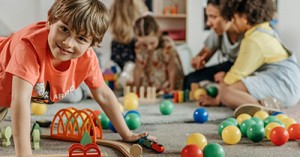
Creating a warm and inviting space in a pack-up, pack-down setting can be challenging, but with a few thoughtful touches, you can transform the environment into a welcoming and engaging space for children and families. Here are some tips and tricks to enhance the atmosphere:
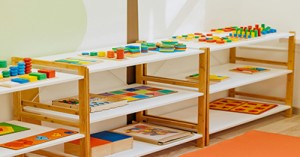
The following article provides information on Strategies For Getting Educators Engaged In Planned Activities, Create A Simple, Visual Planning Board, Encourage Educators To Co-Create The Program and more.

A Curiosity Approach environment fosters exploration, creativity, and sensory-rich experiences, making learning feel natural and engaging. Here are some additional ideas to enhance your nursery room setup.
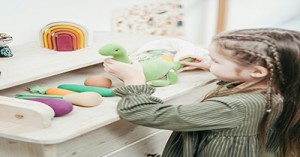
Creating responsive play spaces means designing environments that adapt to children's interests, needs, and developmental stages. Here are some key strategies:
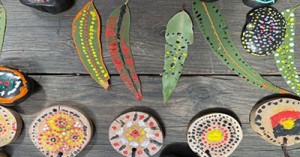
Incorporating Indigenous resources into playspaces helps create a culturally rich and inclusive environment that fosters respect, learning, and connection to First Nations traditions. Here are some ways to modify playspaces meaningfully to incorporate Aboriginal and Torres Strait Islander resources.
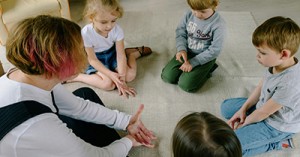
Here are some ideas on how to make your Yarning Circle more meaningful and to help reframe the sharing time while keeping the children engaged.

Mindful praise helps children develop intrinsic motivation and confidence by focusing on effort, creativity, and problem-solving rather than just the outcome. Here are some alternatives to saying "Good job!".

Rough-and-tumble play—often called play fighting—is a form of physical, high-energy play that helps children develop social, emotional, and physical skills. It includes activities like wrestling, chasing, tumbling, and playful grappling, but without aggression or intent to harm.
 Open ended questions cannot be responded to with one word answers such as yes or no. These types of questions enables a child to provide… Read More
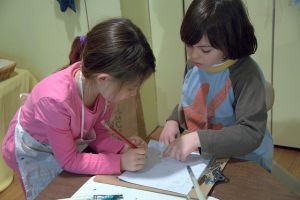 During your child’s preschool years, an important milestone begins to emerge. This is the development of pre-writing skills. Pre-writing skills are used to encourage, develop… Read More
 An Acknowledgment of the Country is a way of showing respect for the Traditional Owners and can be given by both non-Indigenous people and Aboriginal… Read More
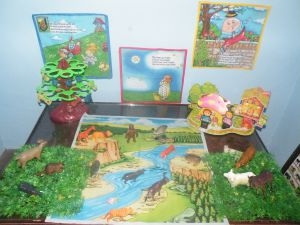 Open ended materials enables children to play freely. They are objects that have no rules to follow, use or function. Raw materials that can be… Read More
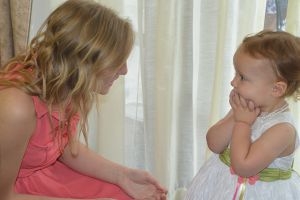 Language plays an important role in a child’s development. It enables a child to communicate effectively with their family, learn at school, socialize with friends,… Read More
 Like adults, children have to deal with their own stress in life. Moving house, starting a new school, preparing for a new sibling - these are… Read More
 Playdough is such a versatile material. It provides numerous benefits to children as they manipulate it, it is safe and soothing and provides children with… Read More
 Teaching children about sustainability enables them to appreciate and respect the natural environment. Early childhood services can provide meaningful hand on learning experiences in order… Read More
 Recycling is an important concept that teaches children to care for the environment. It encourages children to be responsible and show a growing appreciating for… Read More
 Incursions provide children with the opportunity to explore meaningful learning experiences in the comfort of their early childhood service. The following provides a directory of… Read More

As a Cert 3 Qualified Education, you are required to work in a team to...
See more...
On 26 January we celebrate Australia Day. The following provides a list of activities and free...
See more...
A “Look-For” guide is a practical tool used by educational leaders and mentors to identify...
See more...