



In the rhythm of early childhood education, the most meaningful moments often happen in the quiet spaces between routines—when educators kneel to listen, when a child’s story unfolds through play, when connection is felt rather than recorded. Yet across many services, the pressure to document every detail of a child’s day has grown into an unsustainable burden, pulling educators away from presence and into paperwork.
This article clarifies what educators are actually required to document under the Education and Care Services National Regulations—and what can be safely let go.

Toxic environments in early learning services can manifest as gossip, micromanagement, inconsistent policies, emotional invalidation, or even bullying. These psychosocial hazards are not just unpleasant—they’re legally and ethically significant under Work Health and Safety laws.

In early childhood education, trust and collaboration are foundational—not just for children, but for the adults who guide them. Yet across the sector, many educators report that unprofessional gossip among staff continues to undermine workplace culture, erode morale, and fracture team cohesion.

Celebrate Early Childhood Educator’s Day on 2nd September with creative ideas, appreciation activities, and meaningful ways to honour educators.

Early childhood education thrives on diversity. Multicultural teams bring rich perspectives, lived experiences, and linguistic variety that enhance learning environments for children and educators alike.
In this article, we explore how services can support respectful language use, address feelings of exclusion, and uphold the principles of the Early Years Learning Framework (EYLF) and National Quality Standard (NQS)—without compromising identity or connection.

In early childhood education, minimum ratios is one of the most insidious drivers of burnout across the sector. When minimum standards become maximum limits, educators are expected to absorb overwhelming cognitive and emotional loads while maintaining composure, care, and compliance. The result? Chronic stress, professional dissonance, and rising attrition. Ratios don’t just affect supervision—they shape every moment of decision-making, relational engagement, and safeguarding. The following article provides research on the effect of ratios on educators.
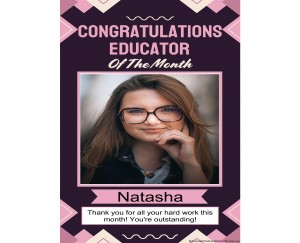
This template is to be used as an Educator Of The Month Display.

Educator burnout in early childhood services is a serious issue, but there are ways to manage and prevent it. The following article provides information on What Is Burnout, What Workplace Adjustments Can Help Reduce Burnout, Strategies On Dealing With Educator Burnout and more.

The following article provides a list of 25 creative team project ideas designed to engage early childhood educators in a meaningful, hands-on way.

A: Dealing with negative behaviors such as passive aggressiveness, negativity, gossiping, cliques, favoritism, and a lack of motivation within an educator team is a challenging yet critical leadership task. These behaviours not only disrupt team cohesion but can also trickle down and impact the learning environment provided for the children. Drawing on experiences shared within the Educational Leaders and EYLF/NQS support groups, here are some strategies and points to consider:
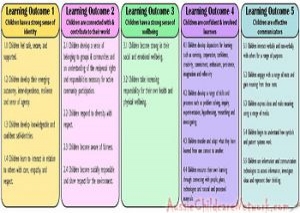 Here is the list of the EYLF Learning Outcomes that you can use as a guide or reference for your documentation and planning. The EYLF… Read More
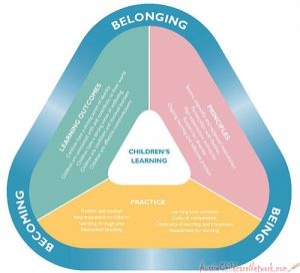 The EYLF is a guide which consists of Principles, Practices and 5 main Learning Outcomes along with each of their sub outcomes, based on identity,… Read More
 This is a guide on How to Write a Learning Story. It provides information on What Is A Learning Story, Writing A Learning Story, Sample… Read More
 One of the most important types of documentation methods that educators needs to be familiar with are “observations”. Observations are crucial for all early childhood… Read More
 To support children achieve learning outcomes from the EYLF Framework, the following list gives educators examples of how to promote children's learning in each individual… Read More
 Reflective practice is learning from everyday situations and issues and concerns that arise which form part of our daily routine while working in an early… Read More
 When observing children, it's important that we use a range of different observation methods from running records, learning stories to photographs and work samples. Using… Read More
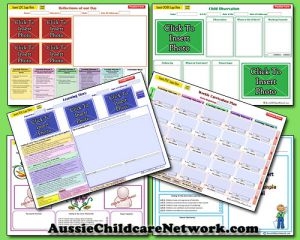 Within Australia, Programming and Planning is reflected and supported by the Early Years Learning Framework. Educators within early childhood settings, use the EYLF to guide… Read More
 This is a guide for educators on what to observe under each sub learning outcome from the EYLF Framework, when a child is engaged in… Read More
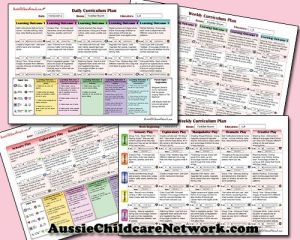 The Early Years Learning Framework describes the curriculum as “all the interactions, experiences, activities, routines and events, planned and unplanned, that occur in an environment… Read More

On 26 January we celebrate Australia Day. A day to reflect on what we have...
See more...
Quality Area Cheat Sheets 1–7: Simplify NQS standards with clear guides for educators and services.
See more...
This article focuses on providing actionable strategies and practical techniques for educational leaders to effectively...
See more...