



From 27 February 2026, it is now a legal requirement that every decision and action in early childhood education and care services must put the safety, rights, and best interests of children first. This change elevates what was once a guiding principle under the NQF into a statutory duty.

The Child Safe Standards provide a nationally consistent framework to ensure that organisations working with children create environments that are safe, inclusive, and empowering. In OSHC settings, these standards are not just about compliance; they are about embedding a culture where children’s rights, voices, and well-being are central to everyday practice.
Reflection is a powerful tool for educators: it helps identify strengths, highlight gaps, and ensure that child safety is lived in daily routines rather than just written in policy. The following reflection questions are designed to guide OSHC teams in critically examining how each of the 10 Child Safe Standards is enacted in practice. They encourage staff to move beyond “tick‑box” compliance and towards genuine, child‑centered engagement.

Practical strategies to embed NSW Child Safe Standards in childcare, ensuring safety, inclusion, and strong family partnerships.
From 01 July, new Child Safe Standards commenced to better protect children and to provide more clarity for organisations. The eleven new Standards have replaced Victoria’s seven standards and principles.
In response to the Royal Commission regarding institutional Responses to Child Sexual Abuse, The Teacher Accreditation Act 2004 has been amended. From now on the New South Wales Education Standards Authority (NESA) will be making decisions about teacher accreditation at all levels, including the early childhood sector.
The Child Safe Standards recommended by the Royal Commission provide a framework for making organisations safer for children. They have been accepted by the NSW government. Based on extensive research and consultation, the Standards provide tangible guidance for organisations to create cultures, adopt strategies and act to put the interests of children first, to keep them safe from harm.
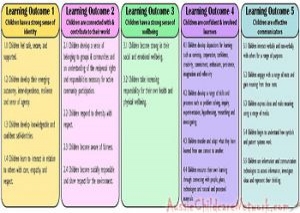 Here is the list of the EYLF Learning Outcomes that you can use as a guide or reference for your documentation and planning. The EYLF… Read More
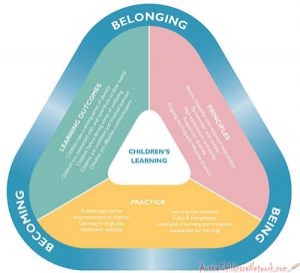 The EYLF is a guide which consists of Principles, Practices and 5 main Learning Outcomes along with each of their sub outcomes, based on identity,… Read More
 This is a guide on How to Write a Learning Story. It provides information on What Is A Learning Story, Writing A Learning Story, Sample… Read More
 One of the most important types of documentation methods that educators needs to be familiar with are “observations”. Observations are crucial for all early childhood… Read More
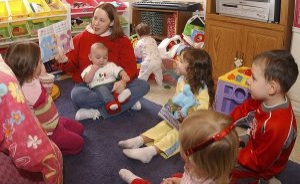 To support children achieve learning outcomes from the EYLF Framework, the following list gives educators examples of how to promote children's learning in each individual… Read More
 Reflective practice is learning from everyday situations and issues and concerns that arise which form part of our daily routine while working in an early… Read More
 When observing children, it's important that we use a range of different observation methods from running records, learning stories to photographs and work samples. Using… Read More
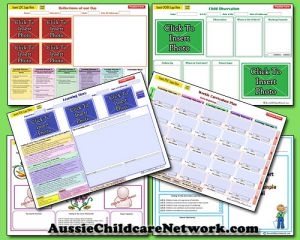 Within Australia, Programming and Planning is reflected and supported by the Early Years Learning Framework. Educators within early childhood settings, use the EYLF to guide… Read More
 This is a guide for educators on what to observe under each sub learning outcome from the EYLF Framework, when a child is engaged in… Read More
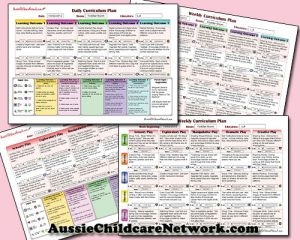 The Early Years Learning Framework describes the curriculum as “all the interactions, experiences, activities, routines and events, planned and unplanned, that occur in an environment… Read More

Children’s gardens are more than just spaces for growing plants—they are living classrooms where curiosity...
See more...
Family tree photo displays are more than just decorations; they are living stories within the...
See more...
Writing critical reflections for the National Quality Standards (NQS) in early childhood education involves a...
See more...