



In early childhood, educators often go above and beyond their rostered hours. Whether it’s arriving early to set up learning spaces, staying back to complete documentation, or attending mandatory staff meetings, these minutes matter. Every minute worked counts and must be paid.

No new increase—15% grant uplift for early educators is now permanent, secured by legislation and tied to NQS compliance.


For some long-serving staff, the new Award minimum after the 1 July 2026 increase is still lower than the Award minimum, they were entitled to on 28 February 2026. To stop these staff from taking a pay cut, FWC introduced “Retained Minimum Rates.”

From July 2026, educators under the Children's Services Award, will see both a 5% gender equity increase and a 4.75% annual award rise, with further staged increases to follow. The WRG is temporary and will be phased out, ensuring all educators are treated equally under the Award. Importantly, these increases are universal, every educator covered by the Children’s Services Award who is currently on minimum award wages will receive them.
The Federal Government has announced an extension of the Worker Retention Payment program until June 2028, securing funding for a 15% above‑award wage increase for educators at participating services.
However, it is important to clarify this is not a universal pay rise for all educators. It is an extension of a grant program. Only educators employed at services that applied for and were approved under the program will continue to receive the higher wages. Educators at non‑participating centres remain on award wages.

Negotiation is not just about money; it’s about recognition. As an ECT, you bring expertise, leadership, and stability to services. By approaching wage discussions with confidence and professionalism, you can ensure their contributions are valued and sustained.

As of 1 March 2026, the Fair Work Commission’s changes to the Children’s Services Award 2010 officially took effect, and now—one month later—all early childhood educators covered by the award should have received their pay increase. This marks a significant step in addressing gender-based undervaluation in the sector.

From 1 March 2026, the Fair Work Commission has officially increased wages under the Children’s Services Award. This decision came after a review into gender‑based undervaluation, meaning educators’ work is now recognised as more valuable and fairly paid. At the same time, the Worker Retention Payment (WRP) program is still running. It was introduced to make sure services can afford to pay staff more and to encourage educators to stay in the sector.

The Fair Work Commission has officially implemented wage increases for early childhood educators as part of its gender-based undervaluation review. The updated pay rates and classification structure are now in effect from 1 March 2026.
 The Children’s Services Award introduces a streamlined classification system and updated pay rates designed to better recognise the skills, qualifications, and responsibilities of early childhood… Read More
 The Children’s Services Award has 8 clear levels. These levels make it easier to understand where you fit, based on your experience, qualifications, and responsibilities.… Read More
 When working as a qualified early childhood teacher (with a university degree) within a service, your rate of pay will come from the Educational Services… Read More
 Diploma-qualified educators play a vital role in early childhood services, taking on responsibilities that range from supporting children’s learning and development to leading rooms and… Read More
 Certificate III qualified educators form the backbone of early childhood services, providing essential care and learning support for children across all settings. Their wages under… Read More
 Early Childhood Teachers (ECTs) play a vital role in leading curriculum and pedagogy in early learning settings. Regulation 272 of the Education and Care Services… Read More
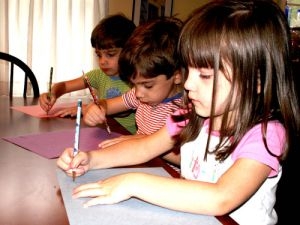 Discover how school readiness programs support children’s independence, confidence, and skills for a successful transition into primary school.
Read More
Discover how school readiness programs support children’s independence, confidence, and skills for a successful transition into primary school.
Read More
 When an Educator is not performing their tasks or responsibilities at best practice, these issues need to be addressed for the Educator to understand where… Read More
 Educators can maximise tax deductions by claiming classroom supplies, training, union fees, and home office costs this financial year.
Read More
Educators can maximise tax deductions by claiming classroom supplies, training, union fees, and home office costs this financial year.
Read More
 A staff appraisal is a formal, systematic process of determining and reviewing the performance of early childhood educators over a period of time, usually a… Read More

Loose parts Play in outdoor areas transforms the everyday environment into a dynamic, open-ended learning...
See more...
Curiosity Baskets inspire family participation, exploration, and learning through themed contributions.
See more...
In the whirlwind of ratios, regulations, and relentless responsibilities, early childhood educators often forget the...
See more...