



Discover practical strategies for early childhood educators to embed unstructured outdoor play into curriculum, fostering confident learners.
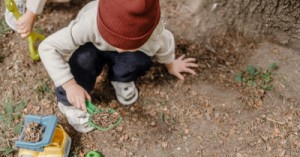
Designing outdoor spaces for little ones is about balancing safety, sensory exploration, and opportunities for growth. Babies and toddlers thrive in environments that invite curiosity while supporting their developmental milestones. Below are practical, creative ideas to guide your setup.

Outdoor sandpit setups in early childhood are best designed as open-ended, sensory-rich environments that encourage creativity, social interaction, and physical development. The most effective setups combine natural materials, loose parts, and flexible structures to allow children to dig, build, and imagine freely.

Outdoor play is vital for children’s well-being, offering opportunities for physical activity, exploration, and connection with nature. In Australia, however, educators face a unique challenge: how to balance children’s right to outdoor play with the risks of extreme heat and high UV exposure. With summer temperatures often exceeding 35°C, services must make careful, informed decisions about when it is safe to go outside.

Loose parts Play in outdoor areas transforms the everyday environment into a dynamic, open-ended learning space. The following article provides information on What Is Loose Parts In The Outdoor Area, Benefits Of Loose Parts Outdoors, How To Integrate Loose Parts Play Outdoors, List Of Loose Parts Play For Outdoor Areas, Innovative Activities for Loose Parts Play Outdoors, Extending On Loose Parts Play and more.

Cold weather play is incredibly beneficial for early childhood development! It helps children build resilience, strengthen their immune systems, and develop essential motor skills. Here’s why outdoor play in winter is important.

The following provides a list of outdoor activities for babies and toddlers that promote sensory exploration and interaction with the natural environment. It also includes linking to the EYLF and the benefits of outdoor play for babies and toddlers.
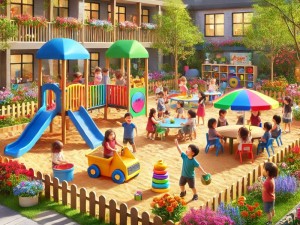
Designing engaging outdoor learning spaces offers stimulating resources and rich play-based learning opportunities that cater to all children’s interests, capabilities, cultures, and communities. The following article provides information on Physical Features Of Outdoor Spaces, Characteristics Of Outdoor Learning Spaces, Consideration For The Design Of Outdoor Spaces, Roles Of Adults In The Outdoor Learning Spaces and more.
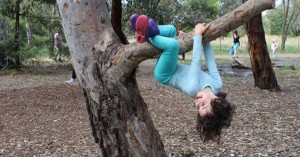
Early education care services are increasingly making bush kinders part of their educational programs. These involve excursions to sites in the midst of nature and away from structured service settings. The following article provides information about the Benefits of Bush Kinders, Supervision, Planning and more.

Playing or even just spending time outdoors has long been recognized as crucial to positive learning and life outcomes in children. Outdoor spaces thus hold great significance in early education and care learning settings and have been addressed in Quality Area 3 – Physical Environment of National Quality Standards. Element - 3.2.1 mandates that “Outdoor and indoor spaces are designed and organised to engage every child in quality experiences in both built and natural environments”. As such, outdoor spaces must be and must be designed with care and conscious thought.
 The Children’s Services Award introduces a streamlined classification system and updated pay rates designed to better recognise the skills, qualifications, and responsibilities of early childhood… Read More
 The Children’s Services Award has 8 clear levels. These levels make it easier to understand where you fit, based on your experience, qualifications, and responsibilities.… Read More
 When working as a qualified early childhood teacher (with a university degree) within a service, your rate of pay will come from the Educational Services… Read More
 Diploma-qualified educators play a vital role in early childhood services, taking on responsibilities that range from supporting children’s learning and development to leading rooms and… Read More
 Certificate III qualified educators form the backbone of early childhood services, providing essential care and learning support for children across all settings. Their wages under… Read More
 Early Childhood Teachers (ECTs) play a vital role in leading curriculum and pedagogy in early learning settings. Regulation 272 of the Education and Care Services… Read More
 Discover how school readiness programs support children’s independence, confidence, and skills for a successful transition into primary school.
Read More
Discover how school readiness programs support children’s independence, confidence, and skills for a successful transition into primary school.
Read More
 When an Educator is not performing their tasks or responsibilities at best practice, these issues need to be addressed for the Educator to understand where… Read More
 Educators can maximise tax deductions by claiming classroom supplies, training, union fees, and home office costs this financial year.
Read More
Educators can maximise tax deductions by claiming classroom supplies, training, union fees, and home office costs this financial year.
Read More
 A staff appraisal is a formal, systematic process of determining and reviewing the performance of early childhood educators over a period of time, usually a… Read More
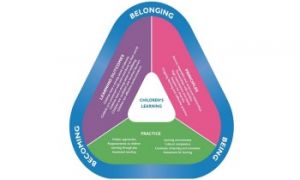
The My Time Our Place Framework provides broad direction for school age care educators in...
See more...
Butterfly Education and Awareness Day (BEAD) is celebrated on June 6, 2026. It was created...
See more...
Holistic approaches in early childhood include a spectrum of teaching goals and practices that facilitates...
See more...