



Calming down an angry child is important as it helps to enhance awareness about their feelings and also helps to balance their emotional development. The following article provides 10 strategies to handle an angry child.
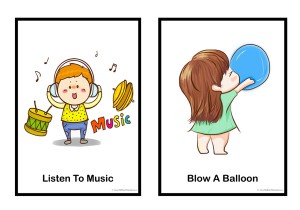
The Anger Management Posters are great to display in a calm-down area to show children how to regulate their emotions when feeling overwhelmed or angry. Children can choose a task to do from the poster and when completing the task it will help them to calm down. These posters can also be added to a display folder that children can flip through and complete when they need some time to themselves.

The years between five and twelve are a time brimming with activity for children – they are developing close friendships, getting stronger in body and mind as well as widening their circle of hobbies and interests. While all this exploration makes for great learning and excitement, also sets the stage for some challenging behaviour. The following article provides information on strategies that Educators can use to promote positive behaviour in OOSH services.

Sharing is challenging for children, especially toddlers. This happens frequently during the development process. The first step in teaching children to share is realising and accepting this. The following article provides information on the Benefits Of Learning To Share, Social Development In Babies and Toddlers, How To Encourage Sharing and more.

Consequences are one of the most effective principles of behaviour management in ECEC settings, as they show children the probable results of their own actions. There are two types of consequences used most often – natural and logical. The following article provides information on Natural consequences, How To Use Natural consequences, Logical consequences and more.

Saying sorry is among the earliest lessons in interpersonal behaviour that children learn when growing. There are indeed many benefits of an apology but adults forget that almost always they depend on both sides genuine feeling the emotions rather than being forced to go through the motions. The following article provides strategies to support children to say sorry more meaningfully.

Aggression is a type of behaviour that is triggered by the intention of causing harm to another person who wishes to avoid that harm. Violence is an extreme subtype of aggression, a physical behaviour with the intention of permanently injuring another person. The following article will provide information on What Is Aggressive Behaviour, Prevention Strategies, Intervention Strategies and more.

Redirection is among the most effective proactive behaviour guidance methods in young children. It consists of simple cues or instructions that prevent problem behaviours from escalating and help children to be more engaged in their learning.

Among the most significant indicators of emotional well-being is positive self-esteem. Like with many other cognitive and physical skills, self-esteem too develops as the result of interactions with environment and people. The following article provides information on What Is Self Esteem, How Self Esteem Develops, Self Esteem Strategies For Babies, Toddlers and Preschoolers.

Saying sorry is among the earliest lessons in interpersonal behaviour that children learn when growing up. There are indeed many benefits of an apology but sometimes we forget that almost always they depend on both sides genuine feeling the emotions rather than being forced to go through the motions. The following article provides information on the Importance Of Apologising and Strategies To Support Children In Saying Sorry.
 Working as a childcare professional can be a challenge especially when dealing with behavioural problems which may arise. The techniques we use when dealing with… Read More
 There are different types of behaviour that children can display and sometimes it can be hard to manage, especially if a child is having behavioural… Read More
 As Educators, there will be many instances where you will need to write about a child's behaviour. For a behaviour management plan, assessments, half-yearly or… Read More
 As a parent, your behavioural expectations of your child can be higher than what is actually developmentally appropriate for your child's age.
Read More
As a parent, your behavioural expectations of your child can be higher than what is actually developmentally appropriate for your child's age.
Read More
 As Educators when communicating with Parents (through verbal or non-verbal communication), there will be times where we need to discuss issues or concerns that may… Read More
 Challenging Behaviour is when a child does something that hurts themselves and/or other people.
Read More
Challenging Behaviour is when a child does something that hurts themselves and/or other people.
Read More
 It's always difficult to bring up behavioural issues with parents, it can be nerve wrecking to tell a parent that their child misbehaves but that… Read More
 As part of your child's development it is normal for your child to have anxiety and fears. A baby commonly shows a fearful sign to… Read More
 All children deal with anger on a daily basis. Thinking about it as a child, there is a lot to be angry about. Elder people… Read More
 It is important to understand that your child behaviour problems could not just be from attention seeking. There are many factors to take into consideration… Read More

There are 6 different types of play that children participate in over the course of...
See more...
It is important to understand that your child behaviour problems could not just be from...
See more...
Toddlers want to do more on their own and do not like it when you...
See more...