


Minecraft has become a powerful tool for engaging children in OOSH. Its open-ended, creative environment allows children to explore, build, and collaborate in ways that naturally align with the MTOP. When thoughtfully facilitated, Minecraft activities can extend children’s interests, foster teamwork, and embed meaningful learning outcomes.

In OSHC, children often mirror cultural trends. The rise of “Sephora kids," young people fascinated by skincare and makeup, has sparked curiosity about how educators can channel this interest safely. While applying cosmetics directly to children’s skin isn’t appropriate, there are many playful, imaginative strategies that let them explore beauty culture without risk.

Potion play is a form of sensory and imaginative play where children mix natural or everyday materials (like water, herbs, petals, spices, sand, or glitter) to create “potions.” It’s not about real magic but about sparking creativity, curiosity, and exploration. Children pretend their mixtures have special powers, which builds storytelling and symbolic thinking.

Lunar New Year (17th February 2026) is a vibrant celebration observed across many Asian cultures, symbolizing renewal, family, and hope for the year ahead. In early childhood settings, it offers a rich opportunity to honor cultural diversity, foster inclusion, and spark joy through sensory experiences, storytelling, and creative play. By tailoring activities to babies, toddlers, and preschoolers, educators can create meaningful, age-appropriate engagements that respect traditions while nurturing curiosity and belonging.

Children thrive when they can do—exploring, tinkering, and experimenting. Science activities in OSHC settings not only engage curious minds but also build teamwork, problem‑solving, and resilience. Best of all, many experiments can be done with everyday materials, keeping costs low while maximising fun.

Children are naturally drawn to bright, vivid colours, which makes rainbow-themed science experiments instantly engaging and relatable. Because colours are part of their everyday world—seen in toys, clothes, art, and nature, rainbow experiments provide a familiar entry point into scientific exploration.
These activities spark curiosity and wonder by showing how ordinary materials can transform into extraordinary displays of color. Whether it’s watching water “walk” across paper towels, seeing milk swirl into rainbow patterns, or layering liquids into a colorful tower, children experience science as something magical yet understandable.

Healthy eating is an important part of children’s growth and development. Embedding food exploration into play and routines helps children build positive relationships with food, develop independence, and learn about their bodies. This theme encourages children to explore fruits, vegetables, grains, and water in fun, age-appropriate ways.

The following gives you 50+ boredom-busting activities across five themed days—Maker Monday, Challenge Tuesday, Creative Wednesday, Active Thursday, and Chill Friday. Each theme includes 10 low-prep, high-engagement ideas that respect older children’s growing identity and sense of autonomy.

Australia Day offers a powerful opportunity to reflect on the rich tapestry that makes this country truly unique. From the enduring wisdom and culture of Aboriginal and Torres Strait Islander peoples to the vibrant diversity of communities across the continent, Australia is a land of many voices, stories, and landscapes. Celebrating Australia Day means acknowledging the past, embracing the present, and nurturing a future built on respect, inclusion, and shared pride.

At the beginning of the year, children step into a new environment filled with unfamiliar faces, routines, and expectations. By introducing the theme “Building Our Classroom Family,” educators create a safe, welcoming space where every child feels valued, connected, and supported.
This theme emphasises belonging, emotional safety, and community. It helps babies form secure attachments, toddlers learn the joy of helping and sharing, and preschoolers develop empathy and responsibility. Through songs, stories, group activities, and family-centered displays, children begin to see the classroom not just as a place to learn, but as a family where everyone cares for one another.
By weaving this theme into daily practice, educators intentionally nurture identity, celebrate diversity, and strengthen the bridge between home and school. The classroom becomes a family where each child’s uniqueness is honored, and together, they build the foundation for lifelong learning and relationships.
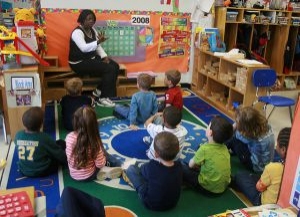 Working as a childcare professional can be a challenge especially when dealing with behavioural problems which may arise. The techniques we use when dealing with… Read More
 There are different types of behaviour that children can display and sometimes it can be hard to manage, especially if a child is having behavioural… Read More
 As Educators, there will be many instances where you will need to write about a child's behaviour. For a behaviour management plan, assessments, half-yearly or… Read More
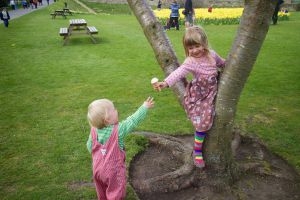 As a parent, your behavioural expectations of your child can be higher than what is actually developmentally appropriate for your child's age.
Read More
As a parent, your behavioural expectations of your child can be higher than what is actually developmentally appropriate for your child's age.
Read More
 As Educators when communicating with Parents (through verbal or non-verbal communication), there will be times where we need to discuss issues or concerns that may… Read More
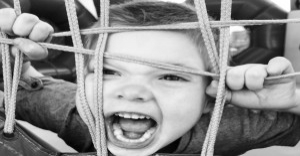 Challenging Behaviour is when a child does something that hurts themselves and/or other people.
Read More
Challenging Behaviour is when a child does something that hurts themselves and/or other people.
Read More
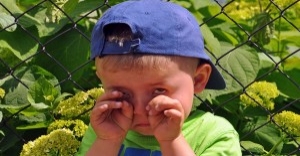 It's always difficult to bring up behavioural issues with parents, it can be nerve wrecking to tell a parent that their child misbehaves but that… Read More
 As part of your child's development it is normal for your child to have anxiety and fears. A baby commonly shows a fearful sign to… Read More
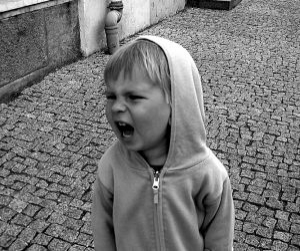 All children deal with anger on a daily basis. Thinking about it as a child, there is a lot to be angry about. Elder people… Read More
 It is important to understand that your child behaviour problems could not just be from attention seeking. There are many factors to take into consideration… Read More
To be familiar with nature, to spend some time amid nature, talking, thinking about trees...
See more...
Attention deficit hyperactivity disorder (ADHD) is a psychiatric disorder of the neurodevelopmental type in which...
See more...
Tremendous advances in brain imaging technology over the last ten years have led to a...
See more...