



Recognition of Prior Learning allows educators to gain qualifications by valuing existing skills, knowledge, and experience.

It’s common for students to be asked to help with cleaning, tidying, and supervising children outdoors. These tasks are part of daily routines and give you insight into how services operate. However, if your placement hours are limited to cleaning and basic supervision, you’re missing out on the learning opportunities placements are designed to provide.

“How are new graduates supposed to gain experience if we are never given a chance?” This question, voiced by many new educators, captures a frustrating reality in our sector. After completing placements and earning qualifications, countless graduates find themselves rejected from job applications because they lack “experience.” Yet placements themselves involve real responsibility—planning programs, observing children, engaging families, and meeting compliance standards. Why isn’t this recognised?

Recent alerts from TEQSA (Tertiary Education Quality and Standards Agency) and ASQA (Australian Skills Quality Authority) have raised concerns about students being funnelled into childcare courses without genuine interest or adequate preparation. Migration agents and private colleges offering fast-tracked qualifications are contributing to a surge of students entering placements without mandatory checks or sufficient training.

Stepping into the role of director brings many responsibilities, and one of the most important is recruiting and supporting new trainees. For many candidates, this is their very first job in the sector. They may be young, inexperienced, and nervous, yet they hold the potential to grow into strong educators who enrich your team.
This article explores practical approaches to interviewing trainees, ensuring the process is supportive, insightful, and aligned with the values of early childhood education.

Our early childhood sector is facing a troubling paradox. On one hand, thousands of students are enrolling in Certificate III programs, eager to join the workforce. On the other hand, services are reporting that these trainees arrive on placement underprepared, leaving educators overwhelmed and children underserved. This mismatch between training and practice is not just frustrating—it’s unsustainable.

Placements are designed to be safe, structured opportunities for students to learn, observe, and gradually build confidence in their professional practice. They are not employment contracts, nor should they be used to fill staffing gaps. When boundaries blur, students can feel pressured, undervalued, and even exploited. Understanding the difference between learning and labour is essential for both centres and students.

Macquarie University’s Bachelor of Education (Early Childhood)—StepAhead Program is designed for diploma-qualified educators with at least two years of post-diploma work experience. It provides a pathway to upgrade existing qualifications into a full bachelor’s degree, recognising prior learning and professional practice.

Under ACECQA’s National Quality Framework, educators are deemed “qualified” if they hold a Certificate III, Diploma, or approved university degree. But qualification does not equal competence. The current system allows individuals with unrelated undergraduate degrees to complete a one-year postgraduate course and enter classrooms, often with minimal practical experience or emotional readiness. The result? A workforce flooded with technically qualified but emotionally disconnected practitioners some of whom openly admit they “don’t like kids” and entered the profession for visa access or job security.

The Diploma of Early Childhood Education and Care gives you an opportunity to explore more career options. From creative resource design to inclusion support, leadership, or advocacy, it offers a rich landscape of opportunities beyond the traditional role of working as an educator in an early learning setting. The following article provides examples of different career pathways for your Diploma qualification.
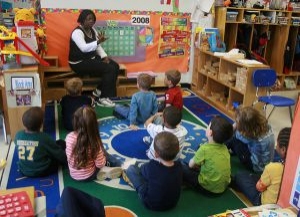 Working as a childcare professional can be a challenge especially when dealing with behavioural problems which may arise. The techniques we use when dealing with… Read More
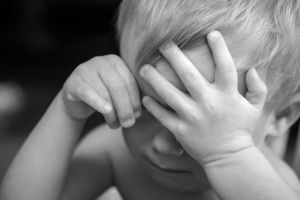 There are different types of behaviour that children can display and sometimes it can be hard to manage, especially if a child is having behavioural… Read More
 As Educators, there will be many instances where you will need to write about a child's behaviour. For a behaviour management plan, assessments, half-yearly or… Read More
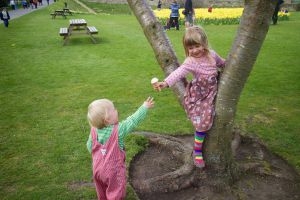 As a parent, your behavioural expectations of your child can be higher than what is actually developmentally appropriate for your child's age.
Read More
As a parent, your behavioural expectations of your child can be higher than what is actually developmentally appropriate for your child's age.
Read More
 As Educators when communicating with Parents (through verbal or non-verbal communication), there will be times where we need to discuss issues or concerns that may… Read More
 Challenging Behaviour is when a child does something that hurts themselves and/or other people.
Read More
Challenging Behaviour is when a child does something that hurts themselves and/or other people.
Read More
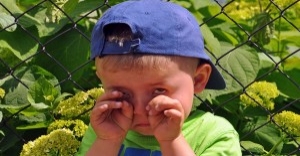 It's always difficult to bring up behavioural issues with parents, it can be nerve wrecking to tell a parent that their child misbehaves but that… Read More
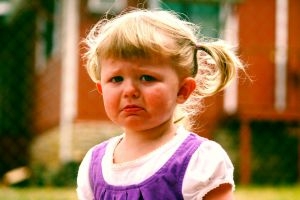 As part of your child's development it is normal for your child to have anxiety and fears. A baby commonly shows a fearful sign to… Read More
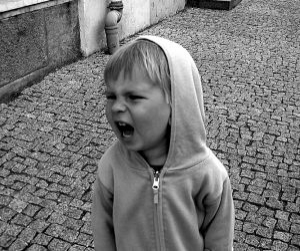 All children deal with anger on a daily basis. Thinking about it as a child, there is a lot to be angry about. Elder people… Read More
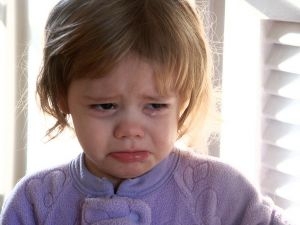 It is important to understand that your child behaviour problems could not just be from attention seeking. There are many factors to take into consideration… Read More

ACECQA guidance clarifies cool down vs time out, supporting QA5 compliance.
See more...
Biting is typical behaviour of infants and toddlers that we often notice. As the children...
See more...
There are 6 different types of play that children participate in over the course of...
See more...