


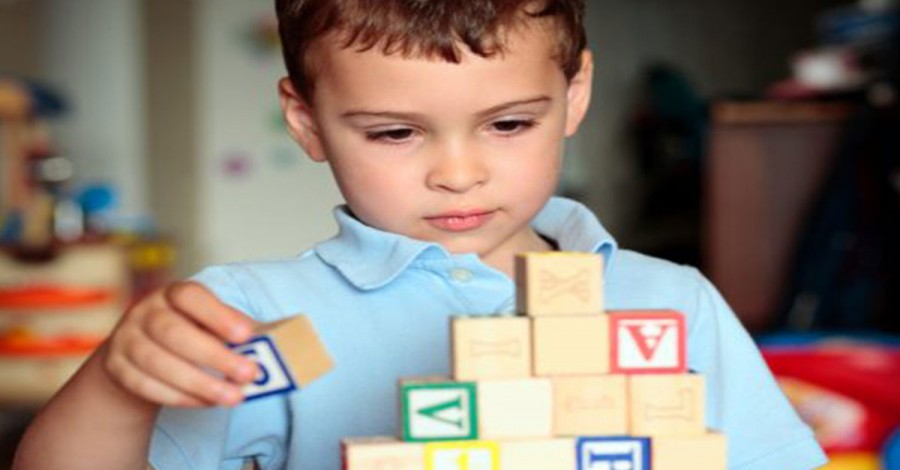
According to new studies Babies who were diagnosed with autism spectrum disorder (ASD) showed a lower level of brain activity in response to 'social' videos of people playing 'peek-a-boo' and 'incy-wincy spider', as well as laughing, coughing, yawning or crying.
However, they were more reactive to 'non-social' images of inanimate objects, such as cars.
As autism is thought to run in families, scientists compared scans of babies aged four to six months, who had siblings with ASD, and those without, to reach their conclusions.
The study, a collaborative effort from scientists at Birkbeck, University of London, University of Cambridge, University College London and King's College London and part of the wider British Autism Study for Infant Siblings (BASIS) Network is the first to show how a baby's brain responses before the age of six months are associated with ASD diagnosis in later life.
Lead researcher Dr Sarah Lloyd-Fox from Birkbeck's Centre for Brain and Cognitive Development said "Identifying early patterns of altered development which may later associate with ASD is important, because it will allow doctors to offer earlier interventions and provide families with earlier avenues for support. This might mean giving the child and parents new strategies to re-engage their attention towards important social cues and learn different ways of interacting.
For more information on Autism, please read the following: Autism In Children
Reference:
Miller, Shari "Autism Can Be Spotted By Monitoring Babies' Reactions To Incy-Wincy Spider and Peek-A-Boo Games, Study Says", MailOnline, 19 August 2018




 G8 Education introduces Emmy and Friends consent lessons, teaching 30,000 children body autonomy, safe adults, and protective behaviours nationwide.
 Indigenous preschools play an important role in preserving language, culture, and identity for future generations. A recent story from Australia highlights how early childhood education