



Join Dr. Mary Anne Hall, from EPEC Education, for a FREE webinar as she breaks down the new inappropriate conduct offense. Exploring how this requirement can be embedded in your workplace and be used as a tool to protect children from harm, abuse, and neglect.

OOSH services often feel the tension between compliance and creativity. The law requires services to meet the outcomes of the approved My Time, Our Place, but it does not prescribe how this must be achieved. The NQS sets benchmarks for quality but avoids rigid rules. This flexibility means educators can focus on meaningful, child-led projects and reflective documentation rather than endless paperwork. A few strong examples each year can be enough to demonstrate compliance.
Today, 1 September 2025, marks a pivotal shift in Australia’s early childhood education landscape, with strengthened child safety regulations now officially in force under the National Quality Framework (NQF). These reforms—fast-tracked following the national review of child safety arrangements—aim to close regulatory gaps, improve incident response, and safeguard children in increasingly digital environments.
Early childhood education and care providers may offer only certain types of incentives from 1 January 2023 to secure a child's enrollment.
In response to the Royal Commission regarding institutional Responses to Child Sexual Abuse, The Teacher Accreditation Act 2004 has been amended. From now on the New South Wales Education Standards Authority (NESA) will be making decisions about teacher accreditation at all levels, including the early childhood sector.
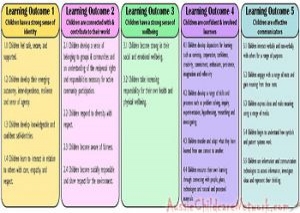 Here is the list of the EYLF Learning Outcomes that you can use as a guide or reference for your documentation and planning. The EYLF… Read More
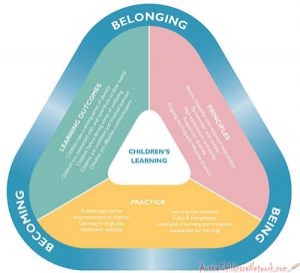 The EYLF is a guide which consists of Principles, Practices and 5 main Learning Outcomes along with each of their sub outcomes, based on identity,… Read More
 This is a guide on How to Write a Learning Story. It provides information on What Is A Learning Story, Writing A Learning Story, Sample… Read More
 One of the most important types of documentation methods that educators needs to be familiar with are “observations”. Observations are crucial for all early childhood… Read More
 To support children achieve learning outcomes from the EYLF Framework, the following list gives educators examples of how to promote children's learning in each individual… Read More
 Reflective practice is learning from everyday situations and issues and concerns that arise which form part of our daily routine while working in an early… Read More
 When observing children, it's important that we use a range of different observation methods from running records, learning stories to photographs and work samples. Using… Read More
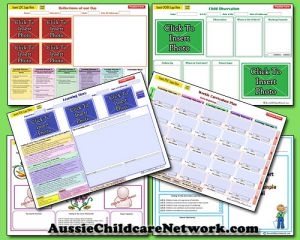 Within Australia, Programming and Planning is reflected and supported by the Early Years Learning Framework. Educators within early childhood settings, use the EYLF to guide… Read More
 This is a guide for educators on what to observe under each sub learning outcome from the EYLF Framework, when a child is engaged in… Read More
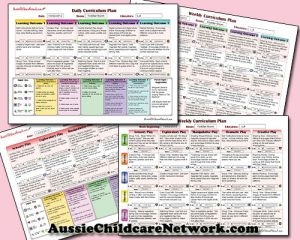 The Early Years Learning Framework describes the curriculum as “all the interactions, experiences, activities, routines and events, planned and unplanned, that occur in an environment… Read More
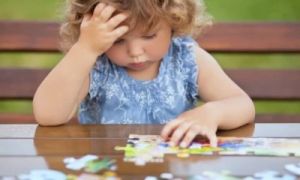
Resilience is the ability to ‘bounce back’ after facing challenges and tough times. For children, this includes experiences like...
See more...
Children are more likely to be confident and involved learners when their family and community...
See more...
In early childhood settings across the country, you can walk into a room and instantly...
See more...