



Quality Area 2 of the National Quality Standard focuses on Children’s Health and Safety, ensuring that environments are safe, hygienic, and supportive of children's well-being. Here are some practical examples of how this can be implemented in the workplace.
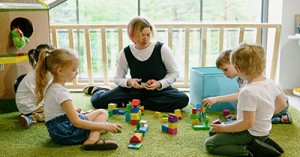
Quality Area 5 of the National Quality Standard focuses on relationships with children. The following article provides a structured list of critical reflection questions for NQS Quality Area 5—Relationships with Children. These questions are designed to help you examine, evaluate, and enhance the ways in which your service fosters secure, respectful, and responsive relationships with children.

The Quality Areas are central to the National Quality Standard (NQS), which promotes high-quality outcomes for children in early education and care. The following article provides information on an Overview Of Each Quality Area, Connecting Quality Areas To National Law and Regulations, Strategies For Implementing Quality Areas, Tools That Can Assist In Implementing Quality Areas and more.

Writing critical reflections for the National Quality Standards (NQS) in early childhood education involves a thoughtful and systematic approach to evaluating and improving your teaching practices. The following articlr provides information on Steps to Write Critical Reflections For The NQS, Critical Reflection Examples for Quality Area 1 To Quality Area 7 and more.

Quality Area 2 of the National Quality Standard focuses on children's health and safety. This area is to safeguard and promote children’s health and safety, minimise risks, and protect children from harm, injury, and infection. The following article provides a list of critical reflection questions to guide thinking and practice for QA2.

Quality Area 1 of the National Quality Standard focuses on Educational Program and Practice. This area ensures that the educational program and practice are stimulating, engaging, and enhance children's learning and development. The following article provides a list of critical reflection questions to guide thinking and practice for QA1.
The National Quality Standard includes seven quality areas, in each quality area includes standards. These standards are high-level outcome statements. Under each standard are elements that describe the outcomes that contribute to the standard being achieved within the service. The following lists the documentation services that are required to have in order to support the achievement of each quality area from 1 to 7.

Providers of childcare care or early childhood educational services are required to get their service rated for quality by regulatory authorities. Quality ratings are provided after assessments against the seven quality areas outlined in the National Quality Standard or NQS. If your service has been rated ‘Working Towards’, here it what means and what you can do to improve your rating.

Critical reflection has been explained in the EYLF as reflective practices that focus on implications for equity and social justice. In the context of childcare, it involves examining and analysing events, experiences and practices from a range of perspectives to inform future planning and decision-making. The following article provides information on Engaging In Critical Reflections, Questions For Critical Reflections, Practicing Critical Reflections and more.
The Quality Support Program, Dual Program Pathways is a professional learning partnership between ACECQA and the NSW Department of Education as the NSW Regulatory Authority (RA) for children’s education and care services and providers.
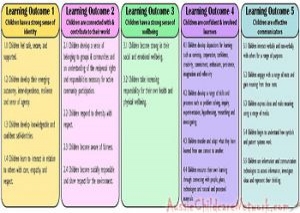 Here is the list of the EYLF Learning Outcomes that you can use as a guide or reference for your documentation and planning. The EYLF… Read More
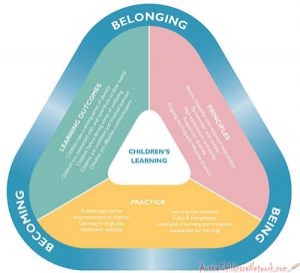 The EYLF is a guide which consists of Principles, Practices and 5 main Learning Outcomes along with each of their sub outcomes, based on identity,… Read More
 This is a guide on How to Write a Learning Story. It provides information on What Is A Learning Story, Writing A Learning Story, Sample… Read More
 One of the most important types of documentation methods that educators needs to be familiar with are “observations”. Observations are crucial for all early childhood… Read More
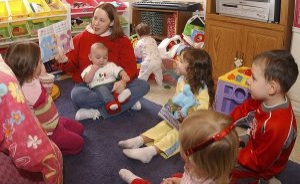 To support children achieve learning outcomes from the EYLF Framework, the following list gives educators examples of how to promote children's learning in each individual… Read More
 Reflective practice is learning from everyday situations and issues and concerns that arise which form part of our daily routine while working in an early… Read More
 When observing children, it's important that we use a range of different observation methods from running records, learning stories to photographs and work samples. Using… Read More
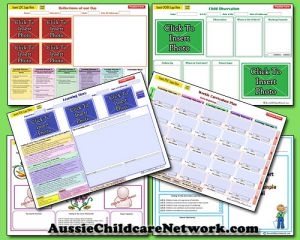 Within Australia, Programming and Planning is reflected and supported by the Early Years Learning Framework. Educators within early childhood settings, use the EYLF to guide… Read More
 This is a guide for educators on what to observe under each sub learning outcome from the EYLF Framework, when a child is engaged in… Read More
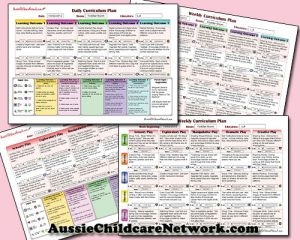 The Early Years Learning Framework describes the curriculum as “all the interactions, experiences, activities, routines and events, planned and unplanned, that occur in an environment… Read More

Transitions are among the most significant factors that determine the well-being of young children. Their...
See more...
NAIDOC Week is a powerful opportunity to introduce toddlers and preschoolers to Aboriginal and Torres...
See more...
Loose parts Play in outdoor areas transforms the everyday environment into a dynamic, open-ended learning...
See more...