


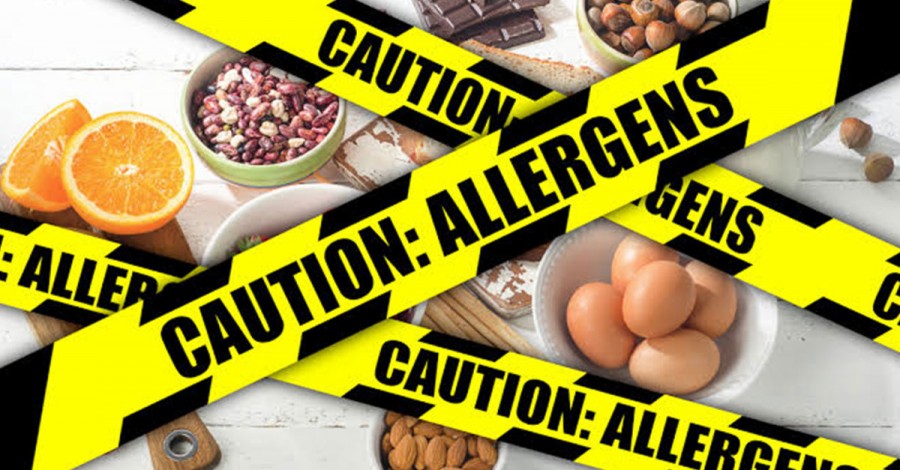
As per the Best Practice Guidelines by Allergy and Anaphylaxis In Australia, in regards to anaphylaxis prevention, it recommends that early childhood services to not ban foods or claim to be free from any allergen such as "nut free".
An ‘allergy aware’ approach which focuses on implementing a range of appropriate risk minimisation strategies is recommended.
In cases where the children are of a young age (e.g. infants, toddlers) or have cognitive impairments limiting their ability to manage their own food allergies, it may be appropriate to implement allergen-restricted zones to reduce the risk that they will accidentally eat a food allergen.
For example, this may be appropriate if there are children eating messy egg meals, grated cheese or drinking milk,
so that they are not sitting next to children with egg or milk (dairy) allergy.
Children with food allergy must not be isolated from others.
Some CEC services do not include peanuts and tree nuts in their menus as these are not essential foods and can easily be eaten at home.
Foods such as wheat, milk (dairy), egg and soy are staple foods providing important nutrition and therefore cannot be removed in CEC services, hence the use of allergen-restricted areas if required.
For more information, please read the following: Best Practice Guidelines
 G8 Education introduces Emmy and Friends consent lessons, teaching 30,000 children body autonomy, safe adults, and protective behaviours nationwide.
 Indigenous preschools play an important role in preserving language, culture, and identity for future generations. A recent story from Australia highlights how early childhood education