search aussie childcare network

Articles

  • Detail View
  • List View
Performance appraisals in early childhood education play a crucial role in supporting professional development and ensuring that educators feel valued, understood, and supported. They are not simply bureaucratic paperwork; they serve as structured conversations designed to promote self-reflection, assess performance,…
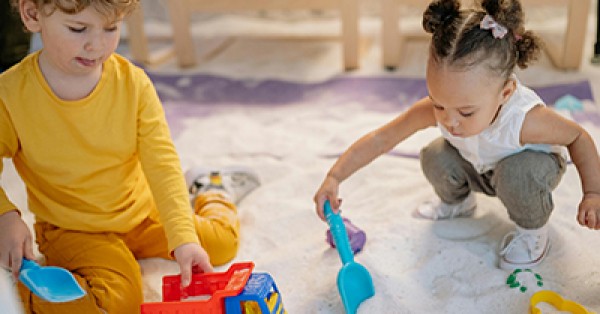
The trajectory schema is one of the key patterns observed in schematic play, where children explore movement—particularly the paths objects take when they are thrown, dropped, or otherwise in motion.
Shifting toward a more interactive culture requires intentional, supportive practice. Here are some ideas to encourage educators to actively engage with children.
Empowering educator well-being and belonging is about creating an environment where educators feel seen, supported, and valued—not just as professionals but as whole people. When educators feel that what they do truly matters, they’re more engaged, resilient, and effective in…

Documenting infant and toddler learning is a vital practice that captures the essence of their developmental journey. It involves observing, recording, and reflecting on their actions, interactions, and milestones to make their learning visible. The following article provides information on: …
Schematic play refers to repeated patterns of behavior that children exhibit as they explore the world around them. These behaviors, known as schemas, are essential for understanding how things work and for brain development. The following article provides information on …
A Quality Improvement Plan (QIP) in early childhood education is a structured approach to assessing and enhancing the quality of care and learning experiences provided to children. It helps childcare providers reflect on their practices, identify areas for improvement, and…
The relationship between families and educators forms the backbone of a supportive environment for children’s growth. When these partnerships are strong, they create a continuity of care and shared values that empower children to thrive both academically and emotionally. The…
Achieving EYLF Outcome 5—Children Are Effective Communicators—in the Babies Room focuses on fostering foundational communication skills in the youngest learners. In an environment where babies largely communicate non-verbally, educators play a crucial role in creating opportunities for both expressive and…
Social Constructivist Theory in Early Childhood Education is a learning approach grounded in the idea that children actively construct knowledge through their social interactions and cultural experiences. Rather than viewing learning as an individual process of acquiring information, social constructivism…
Quality Area 4 focuses on Staffing Arrangements in early childhood education settings. It ensures that educators are qualified, experienced, and collaborative, fostering a positive learning environment for children. Here are some key terms associated with this area.
EYLF Outcome 4 centers on empowering children to become self-assured, engaged participants in their own learning. It’s all about nurturing a mindset where children perceive learning as an active, enjoyable, and continual journey. The following article provides information on the…
Child Care Documentation App

© 2009-2026 Aussie Childcare Network Pty Ltd. All Rights Reserved.