
Indoor sand play is a sensory-rich, imaginative activity where children explore sand in contained environments such as trays, tubs, or sand tables. It offers opportunities for creativity, problem-solving, and emotional regulation while minimizing the mess of outdoor sandpits.
Learning Benefits
- Sensory Development: Engages touch, sight, and sometimes sound, supporting sensory integration.
- Fine Motor Skills: Scooping, pouring, and molding strengthen hand-eye coordination and dexterity.
- Cognitive Growth: Encourages experimentation with volume, texture, and cause-and-effect.
- Language & Communication: Children narrate stories, negotiate roles, and expand vocabulary.
- Social Skills: Promotes sharing, cooperation, and collaborative play.
- Emotional Regulation: Provides calming, repetitive actions that support self-regulation.
Materials Needed
- Container: A large, shallow tub, sand table, or repurposed storage box.
- Sand: Use clean play sand or kinetic sand (less mess indoors).
- Base Protection: Plastic tarp, rubber mat, or washable floor covering.
- Tools & Accessories: Scoops, buckets, molds, sifters, funnels, and figurines.
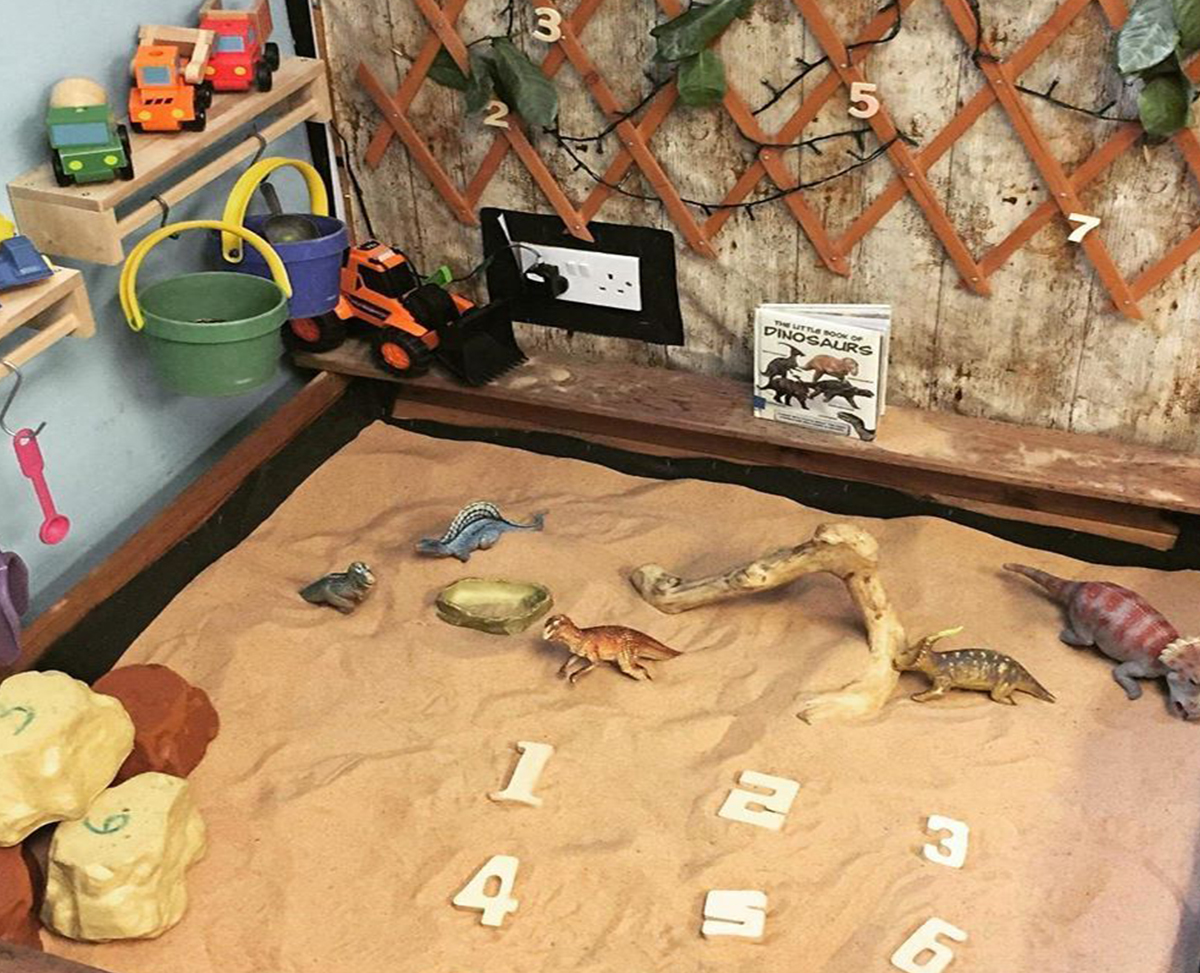
- Optional Additions: Colored sand, natural items (stones, shells), or themed props (construction vehicles, animals).
Step-by-Step Setup
-
Choose Location
- Select a well-ventilated area with easy access for cleaning.
- Avoid carpeted spaces if possible.
-
Prepare the Base
- Lay down a tarp or mat to catch spills.
- Position the sandpit container securely on top.
-
Add Sand
- Fill the container with 5–10 cm depth of sand (enough for digging but not excessive).
- If using kinetic sand, smaller amounts are sufficient.
-
Provide Tools
- Offer a mix of open-ended tools (spoons, cups, molds) and thematic props.
- Rotate accessories weekly to keep play fresh.
-
Set Boundaries
- Establish clear rules: sand stays inside the pit, hands are washed after play.
- Limit group size for easier supervision.
-
Create Themes
- Rotate setups: Beach Day, Construction Zone, Treasure Hunt, Animal Habitat.
- Add storytelling prompts to spark imagination.
Practical Setup
- Materials: Kinetic sand, play sand, or colored sand; trays, tubs, or sand tables; scoops, molds, figurines.
- Environment: Place mats/tarps underneath, use smaller amounts of sand, and set clear boundaries for play areas.
- Themes: Rotate setups (construction site, beach day, treasure hunt) to sustain engagement.
- Safety: Ensure sand is non-toxic, supervise closely, and establish hygiene routines (handwashing after play).
Educator Role
- Facilitator: Provide tools, prompts, and themed setups.
- Observer: Document children’s exploration, language, and problem-solving.
- Scaffolder: Extend play with open-ended questions (“What happens if we add more sand?”).
- Reflector: Encourage children to share what they built or discovered, linking play to broader learning outcomes.
Photo Ideas


Further Reading
Benefits Of Sand and Water Play
Kinetic Sand
Spontaneous Play In Early Childhood
Image References:
Image 1—Rose McInnes, Pinterest
Image 2—Twinkl Early Years, Pinterest
Image 3—Nikki Kirkwood, Pinterest
Image 4—Jaclyn Lide, Pinterest
Image 5—Rose McInnes, Pinterest
Image 6—Fizzy Flare, Pinterest
Image 7—Hannah Walsh, Pinterest
Image 8—Rose McInnes, Pinterest