



Celebrating NAIDOC Week with babies aged 0–12 months is a beautiful opportunity to introduce them to the richness of Aboriginal and Torres Strait Islander cultures through sensory, visual, and rhythmic experiences. Here are some gentle, age-appropriate ideas tailored for your littlest learners.

Math resources and manipulatives are powerful tools that bring abstract concepts to life for young learners. When incorporated thoughtfully into play-based environments, math manipulatives not only support EYLF outcomes but also nurture confidence, curiosity, and a lifelong love of learning. The following lists 10 Math Resources and Manipulatives for Children.

Here’s a thoughtfully curated list of 20 autism-friendly activities that align beautifully with inclusive early childhood practices. These ideas support sensory regulation, communication, emotional development, and agency—while being playful and engaging for all children.

Helping toddlers and preschoolers build emotional vocabulary is like giving them a toolbox for life—they learn to name what they feel, which helps them express themselves, regulate emotions, and connect with others. Here are some engaging, developmentally appropriate strategies and games to teach emotional vocabulary.

A “feelings toolbox” is a collection of strategies, visuals, and resources that help children recognize, express, and regulate their emotions. The following article provides information on What Is A Feeling Toolbox?, Benefits Of A Feeling Toolbox, Feeling Toolbox Tools For Different Age Groups, Effectively Implementing A Feeling Toolbox, Examples For Using The Feelings Toolbox in Real-Life Scenarios and more.

Language and literacy experiences for preschoolers aged 3 to 5 are all about sparking curiosity, building confidence, and laying the foundation for lifelong communication. Here’s a mix of engaging, developmentally appropriate ideas you can weave into your program.

The following provides a playful mix of language and literacy experiences perfect for toddlers (around 2–3 years), designed to build vocabulary, listening, and early communication skills through everyday fun.

Here are 20 engaging activities designed to boost problem-solving skills in preschoolers. Each activity offers a playful and hands-on way to stimulate critical thinking, spatial awareness, and decision-making while keeping learning fun.

Yoga games offer a treasure trove of benefits for kids—blending movement, mindfulness, and play in ways that support both body and mind. The following provides 20 Yoga Games For Preschoolers.
World Music Day is celebrated on June 21st. Music is a powerful tool for fostering inclusivity and cultural appreciation in early childhood education. It introduces children to diverse sounds, rhythms, and traditions from around the world, helping them develop empathy and a broader understanding of different cultures.
 Open ended questions cannot be responded to with one word answers such as yes or no. These types of questions enables a child to provide… Read More
 During your child’s preschool years, an important milestone begins to emerge. This is the development of pre-writing skills. Pre-writing skills are used to encourage, develop… Read More
 Open ended materials enables children to play freely. They are objects that have no rules to follow, use or function. Raw materials that can be… Read More
 An Acknowledgment of the Country is a way of showing respect for the Traditional Owners and can be given by both non-Indigenous people and Aboriginal… Read More
 Language plays an important role in a child’s development. It enables a child to communicate effectively with their family, learn at school, socialize with friends,… Read More
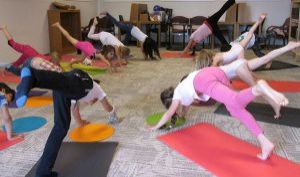 Like adults, children have to deal with their own stress in life. Moving house, starting a new school, preparing for a new sibling - these are… Read More
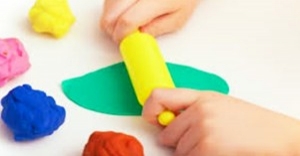 Playdough is such a versatile material. It provides numerous benefits to children as they manipulate it, it is safe and soothing and provides children with… Read More
 Teaching children about sustainability enables them to appreciate and respect the natural environment. Early childhood services can provide meaningful hand on learning experiences in order… Read More
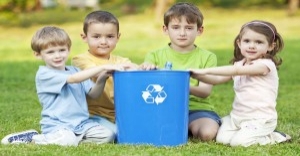 Recycling is an important concept that teaches children to care for the environment. It encourages children to be responsible and show a growing appreciating for… Read More
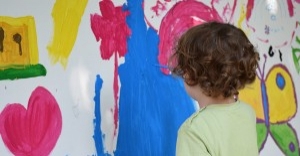 When children apply paint to paper, glue things together, or pound a lump of clay, they experiment with colour, shape design and texture.
Read More
When children apply paint to paper, glue things together, or pound a lump of clay, they experiment with colour, shape design and texture.
Read More

Teaching children Japanese has numerous benefits, both cognitive and cultural. Since children absorb languages more naturally...
See more...
Saying sorry is among the earliest lessons in interpersonal behaviour that children learn when growing...
See more...
The following lists the sub outcomes, examples of evidence when children can achieve each sub...
See more...