
Advantages Of Event Samples
- Facilitates effective collection of information to help inform Educators of possible triggers for an event/behaviour
- Simple and easy to use
- Builds up a picture of a specific behaviour
- They can be adapted to suit different circumstances
- The can be used to monitor progression and success towards any early intervention goals
Disadvantages Of Event Samples
- Time (Requires planning & preparation). Sometimes difficult to capture all that has occurred, particularly prior to an event.
- Needs a prepared chart and therefore cannot be spontaneous
- Charts needs to be carefully designed in order to collect the relevant information
- Data may not explain why the 'events' are occurring
When Should You Use Event Samples
- To observe and record how many times a child shows a specific action/behaviour
- To understand why a child may display such actions/behaviour
- To determine if their are any patterns or triggers to the action/behaviour
How To Record Event Samples
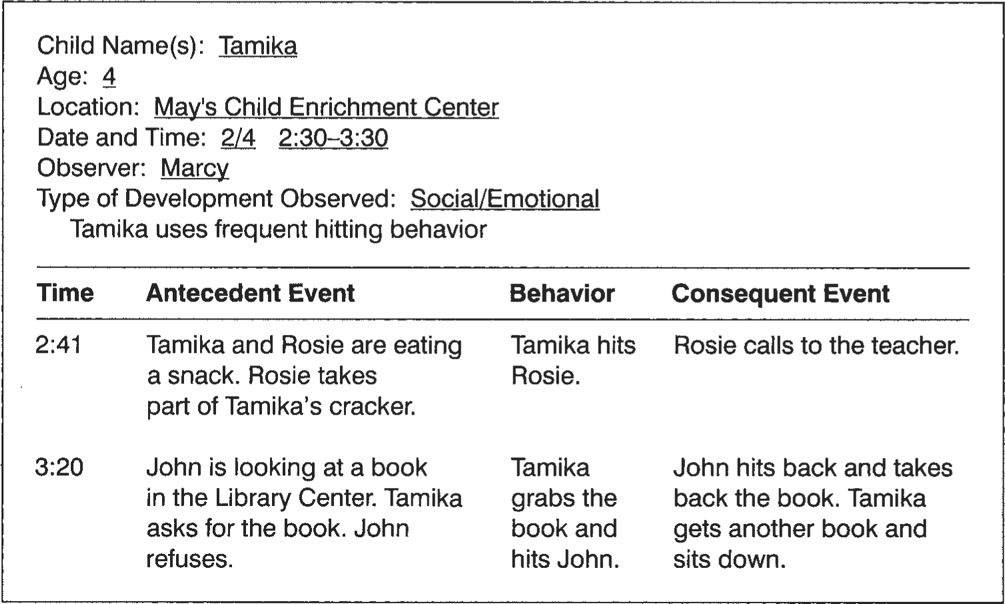
- A for Antecedent (possible triggers, behaviours, actions) immediately prior to the event;
- B for the Behaviour (a summary of the observed behaviour)
- C for the Consequences (what happened immediately after the behaviour/event.
Event samples are usually created using a grid or chart format. The way the grid/chart is set out will depend on the information required. Remember the event to be observed is decided in advance.
Sample 1
Sample 2
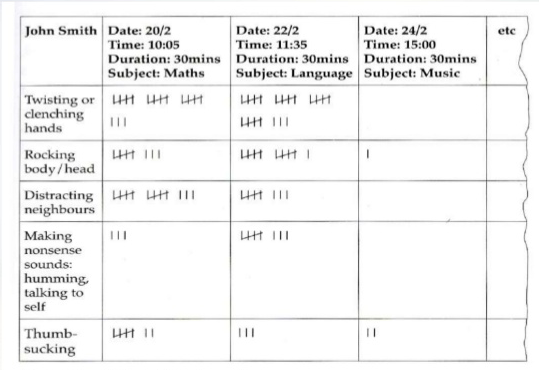
Event sample - frequency counts - involves observation of targeted behaviours or specific events. There is no recording of antecedents or consequences. The observer records a tally or tick every time a particular observable event or behaviour occurs.
The information gathered through Event Samples will help you to assess what sparks a certain reaction in the child and identify the possible causes or consequences of concerning behaviour and find strategies to manage the behaviour effectively.
References
Event Sampling Observation, Reference
Event Sample, Compliant Learning Resources
Observational Methods, Complex Needs UK