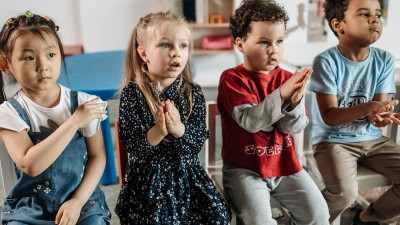
Body percussion is the art of making rhythmic sounds using the body clapping, stomping, patting thighs, snapping fingers, or chest taps. It’s accessible, requires no instruments, and builds musicality, coordination, and group awareness.
How Educators Can Introduce It
- Start with the Beat - Begin with a steady clap or march to establish rhythm.
- Model Actions Clearly - Demonstrate each sound slowly (clap, stomp, pat) before combining.
- Layer Sounds Gradually - Add one action at a time to avoid overwhelming younger children.
- Use Visual Cues - Posters or icons (clap, stomp) help children follow along.
Getting Children Involved
- Copycat Rhythms: Children imitate the educator’s rhythm, then invent their own.
- Name Beats: Clap or stomp syllables of children’s names for personalised rhythm play.
- Group Games: Use bingo cards or rhythm challenges to encourage teamwork.
- Creative Expression: Invite children to lead the group with their own sequences.
Simple Rhythm Patterns
- Clap–Clap–Stomp–Pat - Two claps, one stomp, pat knees. Repeat in a loop.
- Snap–Clap–Stomp - Great for older kids who can snap confidently.
- Pat–Pat–Clap–Stomp - Easy sequence for younger children to follow.
- Clap–Clap–Clap - Three steady claps in a row. Builds a sense of beat.
- Stomp–Clap - Alternate one stomp and one clap. Great for marching games.
- Pat–Clap–Pat - Pat knees, clap hands, pat knees again. Simple and repetitive.
- Clap–Stomp–Clap - Adds variety while staying easy to follow.
- Clap–Pat–Snap - For older children who can snap. Younger ones can replace snaps with pats.
Layered Group Rhythms
- Echo Rhythms - Educator performs a short rhythm, children echo it back.
- Round Rhythms - Divide the group into two; one starts clap–pat, the other joins later, creating overlapping beats.
- Body Percussion - Orchestra Assign actions: one group claps, another stomps, another pats. Combine for a “band” effect.
- Name Beats - Clap or stomp syllables of children’s names.
- Rhythm Storytelling - Add percussion to a story (e.g., stomp for “giant steps,” clap for “rain”).
- Freeze Beat Play a rhythm sequence; children freeze when the beat stops.
EYLF & NQS Links
- EYLF Outcome 3 – Builds physical coordination and body awareness.
- EYLF Outcome 5 – Encourages expressive communication through sound and movement.
- QA1 Educational Program – Embeds creative arts and music learning into daily practice.
Educator Tips
- Keep sessions short (5–10 minutes) to maintain focus.
- Replace finger snaps with pats for younger children.
- Encourage laughter and play; rhythm should feel joyful, not pressured.
- Use transitions: a clap pattern can signal tidy-up or circle time.
Further Reading
Using Music, Rhythm And Movement
How Music Enriches Brain Development In Children
Music Activities For Toddlers and Preschoolers
30 Movement and Dance Activities For Preschoolers