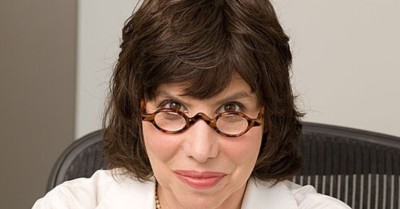
Alison Gopnik (born June 16, 1955) is a leading developmental psychologist and philosopher at the University of California, Berkeley. She is best known for her research on how children learn through exploration, play, and causal reasoning. Gopnik’s work emphasizes that children are active learners who construct and test ideas, much like scientists.
Biography
- Born: Philadelphia, USA
- Education: BA in Psychology & Philosophy (McGill University, 1975); D.Phil. in Experimental Psychology (Oxford University, 1980)
- Current Role: Professor of Psychology and Affiliate Professor of Philosophy, UC Berkeley
- Doctoral Advisor: Jerome Bruner, pioneer in cognitive psychology
- Family Background: Mother Myrna Gopnik was a linguist; brothers Adam and Blake Gopnik are writers
Theories of Alison Gopnik
1. Theory of Mind
Children develop the ability to understand that others have beliefs, desires, and perspectives different from their own.
Theory of Mind refers to the ability of children to understand that other people have thoughts, feelings, beliefs, and perspectives that may be different from their own. It’s a critical milestone in social and cognitive growth, usually developing between ages 3 and 5.
-
Children begin to realize that others have mental states (beliefs, desires, intentions).
-
This helps them predict and interpret behavior.
-
It underpins empathy, communication, and social interaction.
Examples
-
A child hides a toy and understands that another child who didn’t see the hiding will not know where it is.
-
In pretend play, children act out roles, showing they can imagine different perspectives.
-
Storytelling: Ask children how characters feel or what they might be thinking.
-
Role-Play: Encourage acting out scenarios to explore different viewpoints.
-
Discussion Prompts: Use questions like “Why do you think she did that?” to build perspective-taking.
-
Collaborative Play: Group activities where children must anticipate others’ actions.
2. Theory Theory
Children act like scientists, forming intuitive theories about the world and revising them when new evidence appears.
The “theory theory” in cognitive development explains that children learn by forming intuitive theories about the world, testing them through play and exploration, and revising those theories when new evidence appears. Alison Gopnik is one of the main proponents of this idea, describing children as “little scientists.”
Core Idea of Theory Theory
- Children don’t just absorb information passively.
- They construct mental models (theories) about how things work.
- Through observation, experimentation, and play, they test these models.
- When outcomes don’t match expectations, they revise their theories.
Key Features
- Active Learning: Children are curious investigators, not passive learners.
- Hypothesis Testing: Play and exploration act as experiments.
- Revision Process: Mistakes and surprises lead to new understanding.
- Similarity to Science: Mirrors the scientific method — prediction, testing, revision.
Example in Practice
- A toddler drops a spoon repeatedly from a high chair.
- Theory: “Objects fall when I let go.”
- Test: Drop spoon again.
- Result: Spoon falls each time.
- Revision: Child strengthens theory of gravity and cause-effect.
3. Causal Learning
Using Bayesian models, Gopnik showed how children infer cause-and-effect relationships, even at very young ages.
Causal learning in child development refers to how children figure out cause-and-effect relationships in the world around them. Research shows that even preschoolers can infer causal structures by observing, experimenting, and asking “why” questions, much like scientists.
What is Causal Learning?
- Children actively seek to understand how events are connected.
- They build mental models: “If I do X, Y will happen.”
- This process is dynamic and collaborative, often involving caregivers, teachers, and peers.
Key Features
- Observation: Watching outcomes of actions (e.g., blocks falling when stacked too high).
- Experimentation: Trying different actions to see results (e.g., mixing colors).
- Explanation: Asking “why” questions to refine understanding.
- Collaboration: Learning is enhanced when adults elaborate or guide exploration.
Examples in Practice
- A child notices that pressing a button makes a toy light up.
- Theory: “Button causes light.”
- Test: Press again → light appears.
- Revision: Learns about cause-effect consistency.
- In group play, children discuss why a tower fell, combining social explanation with experimentation.
- Exploration Corners: Provide materials like magnets, water, and ramps for testing ideas.
- Curiosity Projects: Let children investigate “big questions” (e.g., “Why do plants grow?”).
- Guided Play: Teachers scaffold learning by asking open-ended questions.
- Collaborative Learning: Encourage peer discussions to build shared causal explanations.
4. Exploration and Play
Unstructured play fosters creativity, resilience, and problem-solving, making it central to learning.
Exploration and Play in child development is one of Alison Gopnik’s most important contributions. She argues that children learn best not through rigid instruction but by actively exploring their environment and engaging in imaginative play. This process allows them to test ideas, discover cause-and-effect, and build resilience.
What Exploration and Play Mean
-
Exploration: Children investigate their surroundings, experiment with materials, and ask questions.
-
Play: Through pretend scenarios, role-play, and games, children practice social skills, problem-solving, and creativity.
-
Together, they form the foundation of self-directed learning.
Key Features
-
Curiosity-driven: Children follow their own interests.
-
Risk-taking: Safe challenges (climbing, balancing) build confidence.
-
Imagination: Pretend play develops empathy and perspective-taking.
-
Resilience: Trial-and-error teaches persistence and adaptability.
Examples
-
A child builds a block tower, watches it fall, and learns about balance.
-
In pretend play, children act out being doctors or parents, practicing empathy and social roles.
-
Exploring water play teaches cause-and-effect (pouring, floating, sinking).
Examples In Practice
-
Exploration Corners: Science tables with magnets, ramps, and natural materials.
-
Role-Play Areas: Dramatic play corners (kitchen, shop, doctor’s office).
-
Outdoor Risk Play: Safe climbing structures and balancing beams.
-
Open-Ended Materials: Loose parts like cardboard, fabric, and recycled items for creative construction.
Applying Alison Gopnik’s Theories in Early Childhood Settings
Practical Strategies for Educators
- Exploration Corners: Create science tables with everyday objects for children to test and observe.
- Perspective-Taking Activities: Use role-play and storytelling to build empathy and social understanding.
- Risk & Resilience Play: Allow safe, risky play (climbing, balancing) to build confidence and resilience.
- Curiosity-Driven Projects: Let children choose “big questions” and guide them through mini-investigations.
- Play-Based Assessment: Observe children’s play to identify learning patterns and inform curriculum planning.
Educator Tips
- Replace “right/wrong” with “What did you discover?”
- Value questions as much as answers
- Provide daily unstructured play time
- Encourage children to explain their reasoning to peers.
Alison Gopnik’s work reshapes how educators view children not as passive learners but as active explorers and thinkers. By applying her theories, teachers can create classrooms that nurture curiosity, resilience, and empathy, laying the foundation for lifelong learning.
Further Reading
Child Theorists and Their Theories in Practice
Linking Theories To The EYLF
Applying Early Learning Theories
Activities That Link To Educational Theories
Early Childhood Theory Cheat Sheet For Documentation