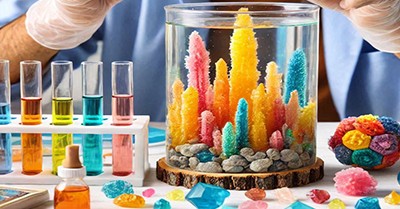
A stalactite is a type of mineral formation that hangs from the ceiling of caves. Watching the slow formation of stalactites teaches patience and keen observation skills. This science project provides hands-on learning about geological processes and the formation of stalactites and stalagmites. The following article provides information on What Is A Stalactite, The Experiment, and more.
What Is A Stalactite?
A stalactite is a type of mineral formation that hangs from the ceiling of caves. These icicle-shaped deposits are formed by the accumulation of minerals, usually calcium carbonate, which is deposited by dripping water. Here’s how they form:
-
Water Dripping: Water seeps through the ground and dissolves minerals from the rock, carrying them along.
-
Drip by Drip: When the mineral-laden water drips from the ceiling of a cave, it leaves behind tiny deposits of minerals.
-
Growth Over Time: Over many years, these minerals build up to form stalactites hanging from the ceiling.
Interestingly, stalactites are often found alongside stalagmites, which are similar mineral formations that grow upward from the cave floor due to dripping water.
The mnemonic to remember: stalactites hang tight from the ceiling, while stalagmites might reach the ceiling from the ground.
The Experiment
Materials Required
-
Two mason jars
-
Baking soda (or Epsom salt)
-
Hot water
-
A piece of string
-
A small weight (like a paperclip)
-
A shallow dish
What To Do
-
Prepare the Solution: Fill each mason jar with hot water. Dissolve as much baking soda (or Epsom salt) as you can into each jar by stirring thoroughly.
-
Setup: Place the jars about 6-8 inches apart. Attach a small weight (like a paperclip) to the middle of the string to ensure it dips into the dish placed between the jars.
-
Connect the Jars: Drape the string between the jars, ensuring that each end of the string is submerged in the solution in the jars. The middle section of the string should hang down and touch the dish.
-
Observe: Over several days, you'll notice water traveling along the string and dripping into the dish. As the water evaporates, it will leave behind baking soda crystals, forming stalactites on the string and stalagmites in the dish.
Hints and Tips
-
Patience is key! This process may take a week or more.
-
Ensure the jars stay in a place where they won't be disturbed.
-
If you want to speed things up, you can periodically add more baking soda solution to the jars.
Reference:
Howwelearn.com